

Table of Contents
What you need to know
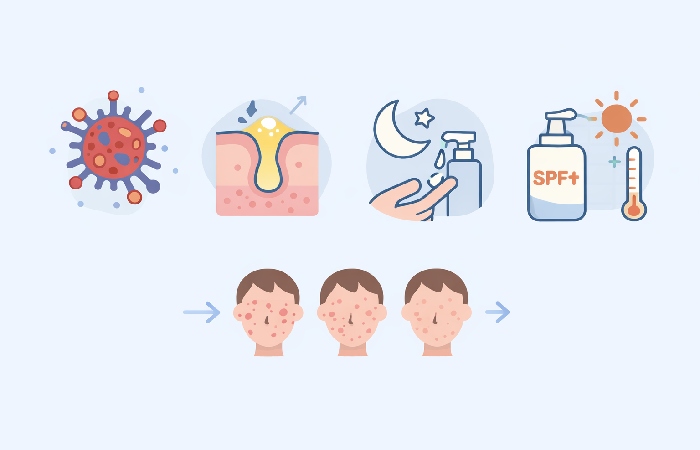
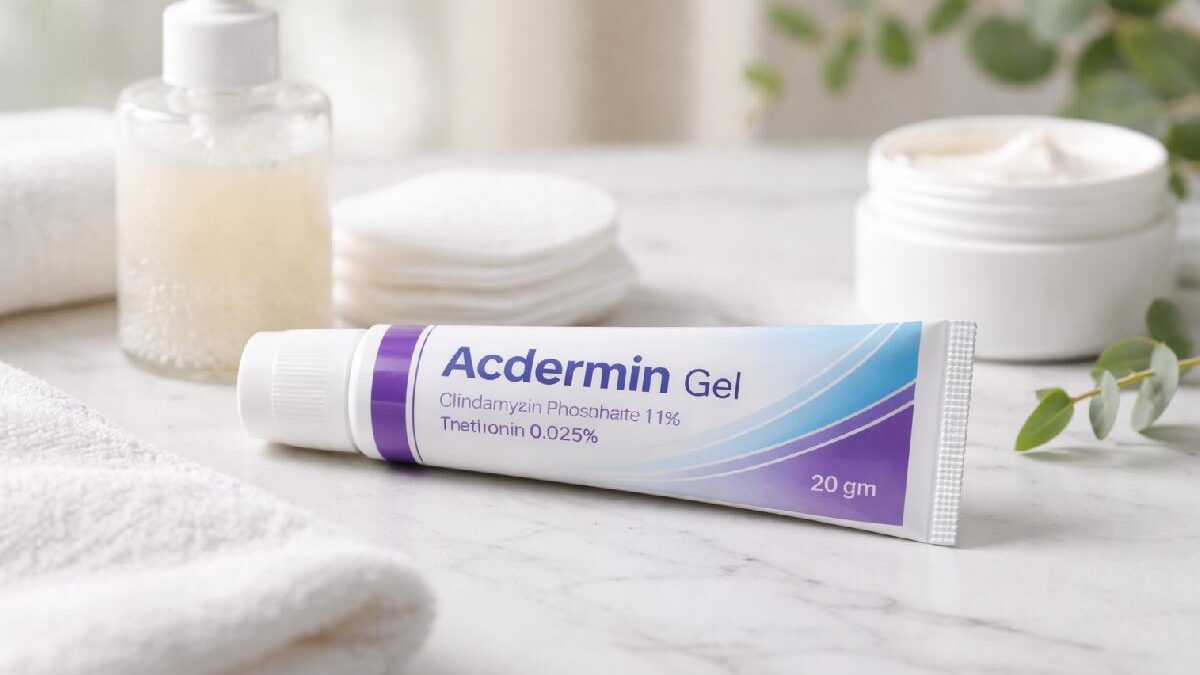
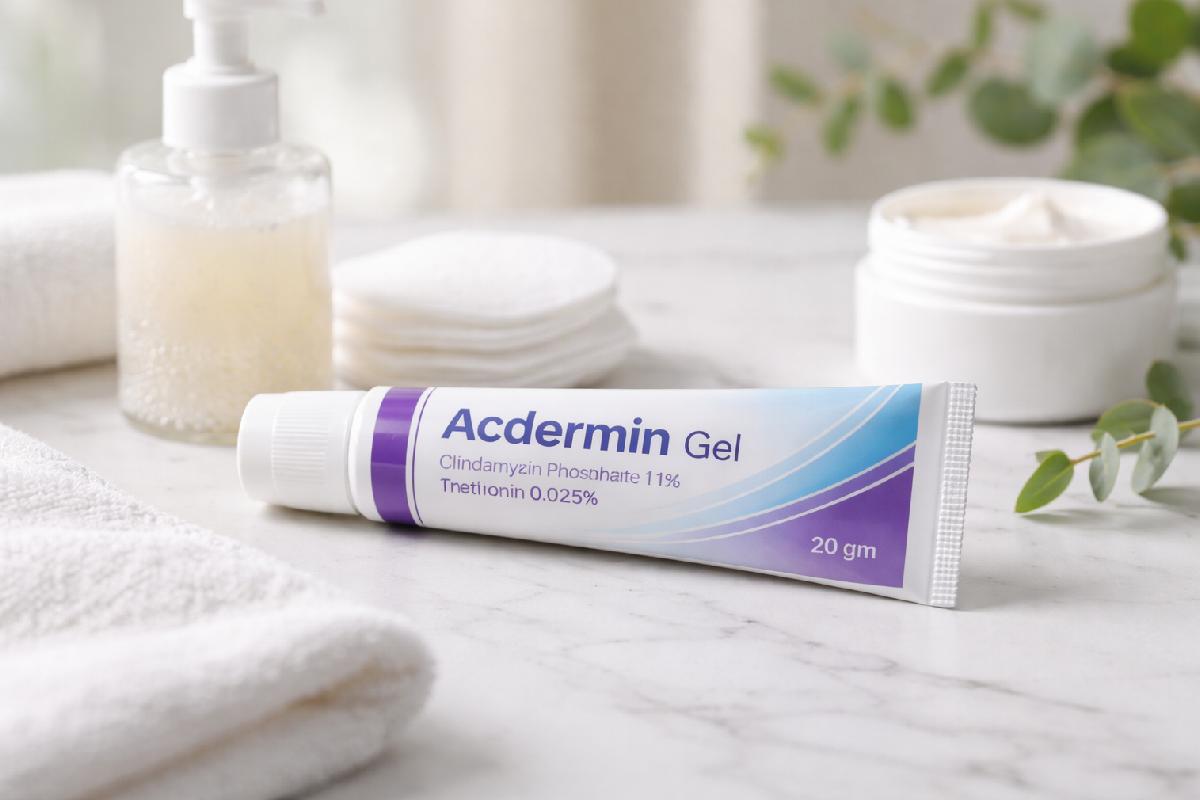
- What is it? → Prescription acne gel (Clindamycin 1% + Tretinoin 0.025%) by ATCO Laboratories
- How does it work? → Kills acne bacteria + speeds up skin cell turnover to unclog pores
- How to apply? → Thin layer on clean, dry skin, once daily at night
- When will I see results?→ Initial improvement in 2–4 weeks; full results at 8–12 weeks
- Most important precaution → Use sunscreen daily — Tretinoin makes your skin significantly more sun-sensitive
What Is Acdermin Gel 20 gm?
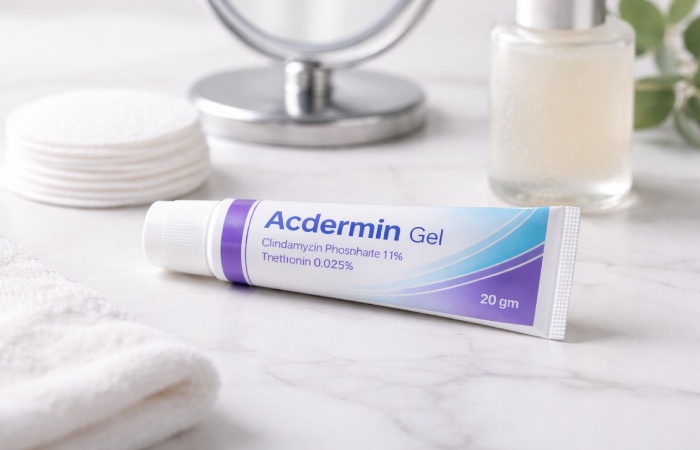
Composition and Active Ingredients
| Ingredient | Concentration | Type | Role |
|---|---|---|---|
| Clindamycin Phosphate | 1% w/w | Lincosamide antibiotic | Kills Cutibacterium acnes bacteria |
| Tretinoin | 0.025% w/w | Retinoid (Vitamin A derivative) | Promotes skin cell turnover, unclogs pores |
Who Manufactures Acdermin Gel?
How Does Acdermin Gel Work?
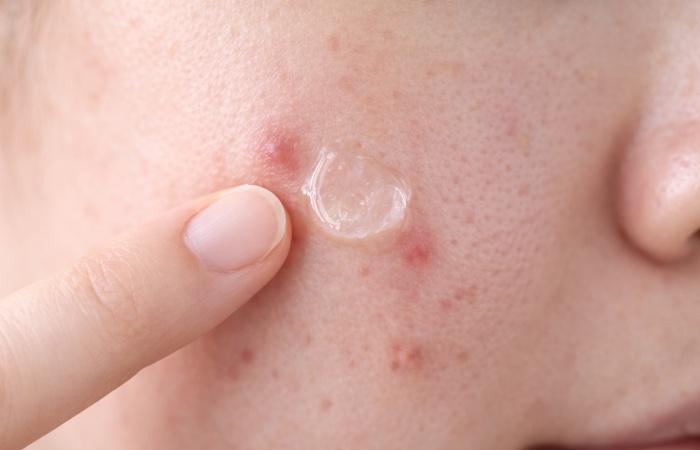
Clindamycin — Fighting Acne-Causing Bacteria
Tretinoin — Accelerating Skin Cell Turnover
Why the Combination Works Better Than Either Alone
- Reduces resistance risk — Tretinoin’s pore-clearing action reduces the bacterial environment, so Clindamycin doesn’t carry the full burden alone
- Covers both acne types— Clindamycin handles inflammatory lesions (red, swollen pimples) while Tretinoin handles non-inflammatory ones (blackheads, whiteheads)
Uses and Indications of Acdermin Gel
Primary Use — Acne Vulgaris
- Inflammatory acne— red, swollen pimples and pustules
- Comedonal acne — blackheads (open comedones) and whiteheads (closed comedones)
- Mixed acne — a combination of inflammatory and non-inflammatory lesions
Other Potential Benefits
- Reducing post-acne hyperpigmentation (dark spots left after breakouts heal)
- Improving overall skin texture and smoothness
- Minimizing the appearance of fine lines over extended use
How to Use Acdermin Gel (Step-by-Step)
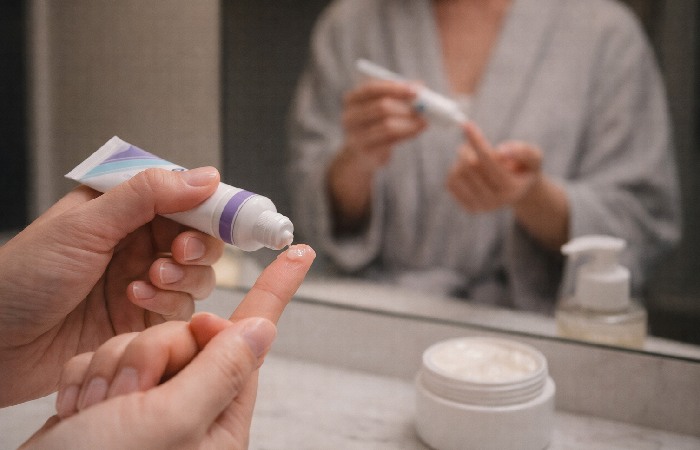
Application Instructions
- Cleanse — Wash your face with a gentle, non-medicated cleanser. Pat dry completely. Wait 5–10 minutes if your skin is damp.
- Apply a thin layer— Squeeze a pea-sized amount onto your fingertip. Dot it across affected areas (forehead, cheeks, chin) and spread gently.
- Timing— Apply once daily, at night. Tretinoin breaks down in sunlight, so nighttime application is essential for effectiveness.
- Avoid sensitive areas— Keep the gel away from your eyes, nostrils, lips, mouth corners, and any open wounds or sunburned skin.
- Follow with moisturizer — If dryness occurs, apply a fragrance-free moisturizer after the gel has absorbed (wait ~5 minutes).
- Morning routine— Apply a broad-spectrum sunscreen (SPF 30+) every morning. This is non-negotiable while using any Tretinoin product.
What to Expect in the First Few Weeks (The Purging Period)
- Small whiteheads or pimples in areas where you typically break out
- Mild flaking or peeling
- Slight redness or dryness
- Severe burning, blistering, or swelling
- Breakouts in areas where you never get acne
- Rash or hives
Side Effects of Acdermin Gel
| Side Effect | Frequency | Severity | What to Do |
|---|---|---|---|
| Mild dryness | Very common | Low | Use a gentle moisturizer |
| Skin peeling/flaking | Common | Low | Reduce frequency to every other night temporarily |
| Redness | Common | Low–Moderate | Normal in first 2 weeks; persistent redness → see doctor |
| Mild burning/stinging | Common | Low | Should fade within minutes; persistent burning → stop use |
| Itching | Occasional | Low | Mild itching is normal; intense itching → consult doctor |
| Increased sun sensitivity | Expected | Moderate | Wear SPF 30+ daily without exception |
| Severe irritation/blistering | Rare | High | Stop immediately and contact your dermatologist |
| Allergic reaction (hives, swelling) | Very rare | High | Seek emergency medical attention |
| Colitis symptoms (severe diarrhea) | Very rare | High | Stop immediately and contact your doctor |
Common Side Effects
Serious Side Effects (When to Stop and Seek Help)
Precautions and Warnings
Sun Sensitivity and Sunscreen Use
- You risk sunburn even on cloudy days
- Hyperpigmentation can worsen instead of improving
- You may develop premature photoaging
Drug Interactions and Products to Avoid
- Benzoyl peroxide — Can deactivate Clindamycin and oxidize Tretinoin (if used, apply them at different times of day)
- Salicylic acid — Increases irritation risk when combined with Tretinoin
- AHA/BHA exfoliants (glycolic acid, lactic acid) — Over-exfoliation risk
- Other retinoids — Stacking retinoids causes excessive peeling and irritation
- Abrasive scrubs or peels— Physical exfoliation combined with a retinoid damages the skin barrier
Who Should Not Use Acdermin Gel (Contraindications)
- Individuals allergic to Clindamycin, Lincomycin, or Tretinoin
- Patients with a history of regional enteritis, ulcerative colitis, or antibiotic-associated colitis
- Pregnant or breastfeeding women— Tretinoin is a Category X retinoid; consult your doctor before use
- Patients with eczema, severe rosacea, or compromised skin barrier — use only under close supervision
Acdermin Gel Price in Pakistan (2026)
| Pharmacy / Platform | Approximate Price (PKR) |
|---|---|
| Local retail pharmacies | ~PKR 340–380 |
| Online pharmacies (e.g., Dawaai, CareStore, PharmacySkinCare) | ~PKR 340–380 |
| Marketplaces (e.g., Daraz) | ~PKR 500–1,000 (varies by seller) |
Acdermin Gel vs. Alternatives
| Feature | Acdermin Gel | Duac Gel | Epiduo | Adapalene Gel |
|---|---|---|---|---|
| Active Ingredients | Clindamycin + Tretinoin | Clindamycin + Benzoyl Peroxide | Adapalene + Benzoyl Peroxide | Adapalene only |
| Prescription Required | Yes | Yes | Yes | OTC (0.1%) / Rx (0.3%) |
| Best For | Inflammatory + comedonal acne | Inflammatory acne | Moderate-to-severe acne | Mild-to-moderate acne |
| Sun Sensitivity Risk | High | Low | Moderate | Moderate |
| Purging Risk | Moderate–High | Low | Moderate | Moderate |
| Antibiotic Resistance Risk | Lower | Lower | None | None |
| Typical Price (Pakistan) | PKR 306–368 | PKR 800–1,200 | PKR 1,500–2,500 | PKR 500–900 |
When Your Dermatologist Might Switch You to Something Else
- Excessive irritation persists beyond 6–8 weeks → Switch to Adapalene (milder retinoid)
- Antibiotic resistance develops → Switch to a non-antibiotic combination like Epiduo
- Severe/cystic acne doesn’t respond → Oral isotretinoin may be considered
- Pregnancy is planned→ All topical retinoids must be discontinued
Common Mistakes When Using Acdermin Gel
- Applying too much — A pea-sized amount covers the entire face. More product means more irritation, not faster results.
- Skipping sunscreen — This is the single biggest mistake. Tretinoin + unprotected sun exposure = worse skin, not better.
- Quitting during the purging phase — Weeks 2–4 can look discouraging. That’s normal. Give it at least 8–12 weeks before judging results.
- Mixing with harsh actives — Layering AHAs, BHAs, or benzoyl peroxide without guidance causes unnecessary irritation and barrier damage.
- Applying on wet skin — Damp skin absorbs Tretinoin faster, dramatically increasing irritation. Always apply on dry skin.
- Using it in the morning — Tretinoin degrades in UV light. Daytime application wastes the product and increases photosensitivity.
Who Should Use Acdermin Gel — And Who Should Avoid It
- Patients aged 12+ with moderate inflammatory and comedonal acne
- Those who need dual-action treatment (antibacterial + pore-clearing)
- Patients under dermatologist supervision seeking a prescription-strength option
- People with only mild, occasional breakouts (OTC options like Adapalene or Benzoyl Peroxide may be sufficient)
- Anyone with a Clindamycin or Tretinoin allergy
- Pregnant or breastfeeding individuals (Tretinoin is Category X)
- Patients with a history of colitis or inflammatory bowel disease
- Those with severely compromised skin barriers (active eczema, severe sunburn)
Final Verdict
Frequently Asked Questions
Q1: Is Acdermin Gel good for acne?
Q2: How long does Acdermin Gel take to work?
Q3: Can I use Acdermin Gel every day?
Q4: Does Acdermin Gel cause skin peeling?
Q5: Can I use sunscreen with Acdermin Gel?
Q6: What is the price of Acdermin Gel 20 gm in Pakistan?
About Theglamourmedia
Theglamourmedia publishes practical, easy-to-understand content on health, technology, business, marketing, and lifestyle. Articles are based mainly on reputable, publicly available information, with AI tools used only to help research, organise, and explain topics more clearly so the focus stays on real‑world usefulness rather than jargon or unnecessary complexity.
Disclaimer
This article is for informational purposes only and is not a substitute for professional medical advice, diagnosis, or treatment. Always talk to a qualified doctor or dermatologist before starting, stopping, or changing any medication, including Acdermin Gel or other acne treatments. Never ignore or delay seeking medical advice because of something you read online, as individual skin conditions and health histories are different.