

Table of Contents
What You Need to Know
- Best overall → Tatcha Indigo Overnight Repair (barrier repair + sensitive-skin safe)
- Best budget → CeraVe Skin Renewing Night Cream (ceramides + peptides, under $20)
- Best luxury → La Mer Rejuvenating Night Cream (rich marine actives)
- Best for anti-aging + dry skin →Clinique Smart Clinical Repair (adaptive peptide hydration)
- Key ingredient rule → Look for ceramides + hyaluronic acid + an occlusive agent; avoid fragrance and drying alcohols
What Makes a Great Night Cream for Dry Skin?
Dry Skin vs. Dehydrated Skin — Why It Matters
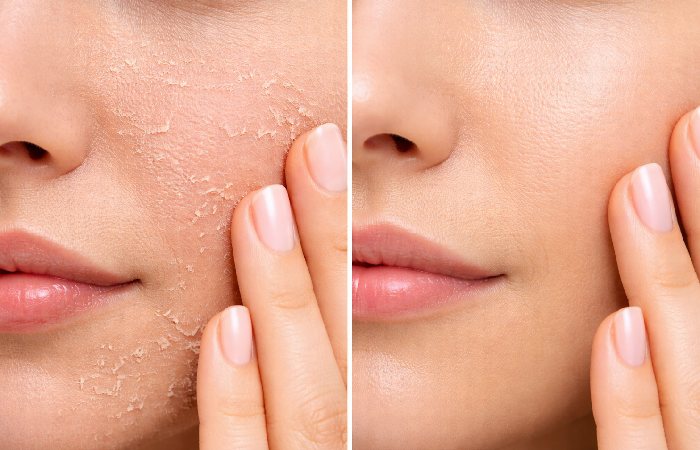
- Dry skin is a skin type. It produces less sebum (oil) than normal. The fix: emollient-rich creams that mimic the oils your skin isn’t producing.
- Dehydrated skin is a skin condition. It lacks water, not oil. Even oily skin can be dehydrated. The fix: humectant-heavy formulas that pull water into the skin.
The Humectant-Emollient-Occlusive Framework
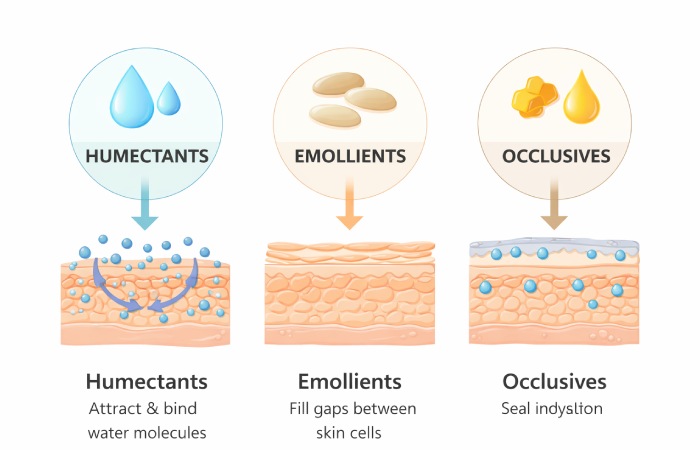
- Humectants (hyaluronic acid, glycerin) — attract and bind water molecules to the skin
- Emollients (squalane, ceramides, shea butter) — fill gaps between skin cells, softening and smoothing
- Occlusives (petrolatum, dimethicone, beeswax) — seal everything in by forming a protective film on the surface
How Night Creams Work While You Sleep

Your Skin’s Circadian Repair Cycle
Transepidermal Water Loss and Why It Peaks at Night
Best Night Creams for Dry Skin (2026 Expert Picks)
Best Overall — Tatcha Indigo Overnight Repair
- Key ingredients: Ceramides, Japanese indigo, red sage root, mondo grass root
- Best for: Dry + sensitive skin, barrier repair, redness-prone complexions
- Price range: $$$ (~$85)
Best Budget — CeraVe Skin Renewing Night Cream
- Key ingredients: Ceramides (1, 3, 6-II), peptides, hyaluronic acid, niacinamide
- Best for: Barrier repair on a budget, everyday hydration
- Price range: $ (~$18)
Best Luxury — La Mer Rejuvenating Night Cream
- Key ingredients: Miracle Broth™, marine retinol alternative, lime tea concentrate
- Best for: Indulgent texture, anti-aging + intense nourishment
- Price range: $$$$ (~$395)
Best for Anti-Aging + Dry Skin — Clinique Smart Clinical Repair
- Key ingredients: CL1870 Peptide Complex, hyaluronic acid, smart hydration technology
- Best for:** Fine lines + dry skin, adaptive moisture
- Price range: $$$ (~$55)
Best for Sensitive + Dry Skin — First Aid Beauty Ultra Repair Hydra-Firm Night Cream
- Key ingredients: Colloidal oatmeal, peptides, ceramides, squalane
- Best for: Eczema-prone skin, extreme sensitivity, redness
- Price range: $$ (~$42)
Best Drugstore — Olay Regenerist Retinol 24 Night Moisturizer
- Key ingredients: Retinol, niacinamide, peptides, vitamin E
- Best for: Anti-aging focus + dry skin, drugstore accessibility
- Price range: $ (~$28)
Best Dermatologist Pick — EltaMD Skin Recovery Night Moisturizer Mask
- Key ingredients: Ceramides, amino acids, squalane, niacinamide
- Best for: Post-procedure recovery, severely compromised barriers
- Price range: $$ (~$45)
Product Comparison Table
| Product | Key Ingredients | Best For | Price | Fragrance-Free? |
|---|---|---|---|---|
| Tatcha Indigo Overnight Repair | Ceramides, Japanese indigo | Dry + sensitive, barrier repair | $$$ (~$85) | Yes |
| CeraVe Skin Renewing Night Cream | Ceramides, peptides, HA, niacinamide | Budget barrier repair | $ (~$18) | Yes |
| La Mer Rejuvenating Night Cream | Miracle Broth, marine retinol alt. | Luxury nourishment, anti-aging | $$$$ (~$395) | No |
| Clinique Smart Clinical Repair | Peptide complex, HA | Anti-aging + dry skin | $$$ (~$55) | Yes |
| First Aid Beauty Ultra Repair | Colloidal oatmeal, ceramides, squalane | Sensitive + dry, eczema-prone | $$ (~$42) | Yes |
| Olay Regenerist Retinol 24 | Retinol, niacinamide, peptides | Drugstore anti-aging | $ (~$28) | No |
| EltaMD Skin Recovery Night | Ceramides, amino acids, squalane | Post-procedure recovery | $$ (~$45) | Yes |
Key Ingredients to Look for (and 3 to Avoid)
Must-Have Ingredients Explained
| Ingredient | Type | What It Does | Best For |
|---|---|---|---|
| Ceramides | Emollient | Restores barrier lipids; ~50% of the skin barrier | Barrier repair, chronic dryness |
| Hyaluronic acid | Humectant | Holds up to 1,000x its weight in water | Deep hydration, plumping |
| Niacinamide | Active | Strengthens barrier, reduces inflammation, evens tone | Redness, sensitivity, dullness |
| Squalane | Emollient | Lightweight oil that mimics skin’s natural sebum | Oil-deficient dry skin |
| Peptides | Active | Signals collagen production, improves firmness | Anti-aging and dryness |
| Glycerin | Humectant | Attracts water to the skin surface | General hydration |
| Shea butter | Occlusive/Emollient | Rich, protective barrier layer | Very dry, cracked skin |
Ingredients That Can Worsen Dry Skin
- Denatured alcohol (alcohol denat.) — strips natural oils, accelerates TEWL
- Synthetic fragrance— common irritant that inflames compromised barriers
- High-concentration retinol without buffe — increases cell turnover faster than the skin can adapt, causing peeling and worsened dryness
How to Apply Night Cream (Step-by-Step)
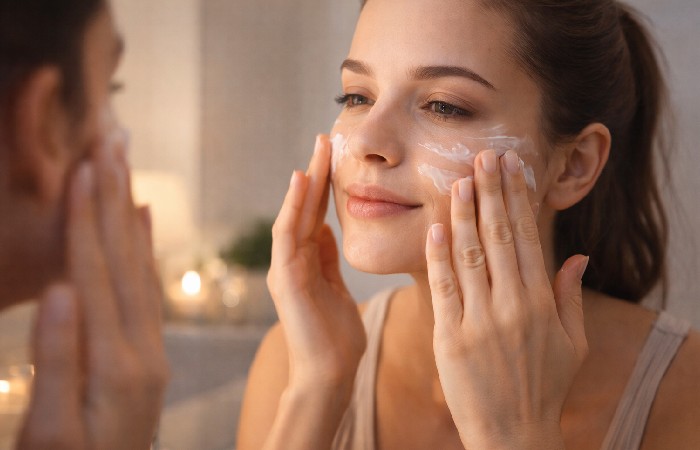
The Correct Layering Order
- Cleanse — use a gentle, hydrating cleanser (no foaming or stripping formulas)
- Tone (optional) — alcohol-free hydrating toner
- Serum — apply water-based serums (hyaluronic acid, niacinamide) first
- Eye cream— if using, apply before night cream
- Night cream — apply to slightly damp skin; this seals in serum hydration
- Occlusive boost (optional) — for very dry skin, add a thin layer of petroleum jelly or balm over the cream (“slugging”)
Pro Tips for Maximum Absorption
- Apply to damp skin — not dripping wet, just towel-patted. This boosts humectant performance by 30–40%.
- Use upward, gentle strokes — don’t drag. Pat the cream onto cheeks, forehead, chin, and neck.
- Don’t forget the neck and décolletage — these areas lose moisture and show aging as fast as the face.
- Wait 60 seconds** before lying on your pillow to avoid transfer.
Common Night Cream Mistakes That Worsen Dry Skin
- Skipping cleansing first — dirt and oil create a barrier that blocks absorption
- Using day cream at night — day creams lack the concentrated repair ingredients and occlusives you need overnight
- Applying to completely dry skin — humectants like hyaluronic acid need water to pull; damp skin gives them something to work with
- Over-exfoliating before applying — harsh scrubs or daily AHA/BHA use strips the barrier faster than your night cream can rebuild it
- Believing “more is better — a pea-to-nickel-sized amount is enough; excess cream clogs pores without adding hydration
- Mixing too many actives— layering retinol + AHA + vitamin C in one routine overwhelms dry skin; simplify
Who Should Use a Night Cream — and Who Shouldn’t
- Dry or very dry skin types (year-round)
- Mature skin losing moisture retention with age
- Compromised barriers (post-procedure, seasonal damage, retinol users)
- Anyone in dry climates or heated/air-conditioned environments
- Very oily, acne-prone skin — unless the formula is non-comedogenic
- People allergic to common ingredients (lanolin, certain plant extracts) — always patch test
- Those already using multiple heavy-oil products — layering too many occlusives can trigger breakouts
Final Verdict
Frequently Asked Questions
Q: Can I use night cream every night?
Q: What ingredients should I look for in a night cream for dry skin?
Q: What’s the difference between a night cream and a regular moisturizer?
Q: Do I need a separate eye cream if I use a night cream?
Q: At what age should I start using a night cream?
Q: Can night cream cause breakouts on dry skin?
About Theglamourmedia
Theglamourmedia publishes practical, easy-to-understand content on health, technology, business, marketing, and lifestyle. Articles are based mainly on reputable, publicly available information, with AI tools used only to help research, organise, and explain topics more clearly so the focus stays on real‑world usefulness rather than jargon or unnecessary complexity.
Disclaimer
This article is for informational purposes only and is not a substitute for professional medical or dermatological advice. Products and ingredients may change, and results can vary by skin type. Always patch test new products and consult a qualified professional if you have existing skin conditions or are using prescription treatments.