


A fuller face or chubby cheeks can make many people wonder how to reduce face fat. Social media is filled with quick fixes and facial exercises promising dramatic slimming results.
But here’s the reality: facial fat is mostly influenced by overall body fat, genetics, and lifestyle habits, not a single exercise or miracle solution.
The good news is that consistent lifestyle changes can gradually slim your face while improving overall health.
This guide explains what face fat is, why it happens, and the most effective ways to reduce it safely and naturally.
Table of Contents
Quick Summary
-
What is face fat → Fat stored around cheeks, jawline, and chin.
-
Main cause → Body fat levels, genetics, and lifestyle habits.
-
Can you lose it quickly → Usually only through overall weight loss.
-
Best strategy → Diet, exercise, hydration, and sleep.
-
Common myth → Facial exercises alone cannot burn facial fat.
What Is Face Fat?
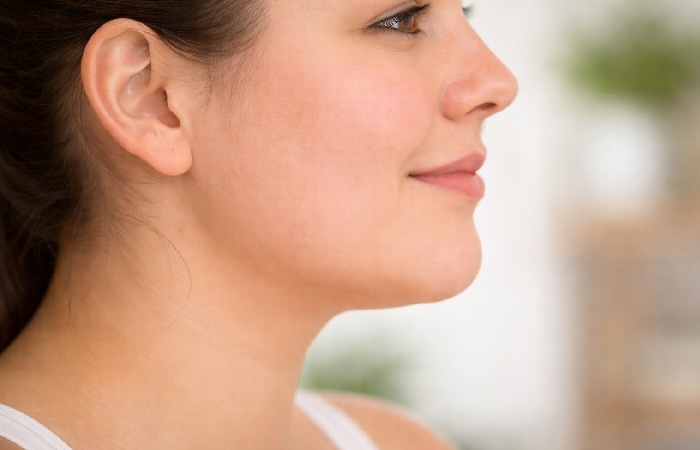
Face fat is the accumulation of fat beneath the skin in areas such as the cheeks, jawline, and chin. This happens when fat cells store excess energy in facial tissues, which can create a fuller or rounder facial appearance.
A key contributor to cheek fullness is the buccal fat pad, a natural fat deposit located between the cheekbones and jawline. According to Harvard Health’s overview of buccal fat pads, everyone has this fat layer in the cheeks, but the amount varies from person to person and influences how round the face appears.
Medical research also describes the buccal fat pad as a deep fat structure in the cheek that contributes to facial fullness and contour, as detailed in a peer‑reviewed anatomical analysis of the buccal fat pad.
Because these fat pads vary in size due to genetics, body weight, and age, some people naturally have fuller cheeks even when they maintain a healthy weight.
Where Facial Fat Is Stored
Facial fat is typically distributed in several areas:
-
Cheeks (buccal fat pads)
-
Jawline
-
Under the chin
-
Neck region
These fat deposits contribute to facial shape and contour. In some cases, fuller cheeks are simply a natural anatomical trait rather than a sign of excess body fat.
Face Fat vs Facial Puffiness
Many people confuse fat with temporary facial swelling.
| Feature | Face Fat | Facial Puffiness |
|---|---|---|
| Cause | Fat storage | Water retention |
| Duration | Long-term | Temporary |
| Trigger | Weight gain, genetics | Salt, alcohol, poor sleep |
| Solution | Fat loss | Hydration and lifestyle changes |
Puffiness may disappear within hours or days, while true fat reduction takes weeks or months.
What Causes Face Fat?
Face fat usually results from a combination of genetics, body fat levels, and lifestyle habits.
Weight Gain and Body Fat
The most common cause of face fat is overall body fat gain.
When body fat increases, fat can accumulate throughout the body—including the face. Losing weight typically reduces facial fat as well.
Studies show that lifestyle changes such as diet improvements and regular exercise help reduce body fat, which can gradually slim the face.
Genetics and Facial Structure
Some people naturally have:
-
Larger buccal fat pads
-
Rounder facial structures
-
Wider cheekbones
This means someone can have a naturally fuller face even at a healthy weight.
Diet and Lifestyle Factors
Several daily habits influence facial appearance.
High Sodium Intake
Too much salt can cause water retention, leading to facial swelling.
Alcohol Consumption
Alcohol may increase dehydration and inflammation, which can make the face appear puffy.
Processed Foods
Diets high in refined carbohydrates and sugar can promote weight gain.
Poor Sleep
Sleep deprivation can increase cortisol levels and contribute to inflammation and fluid retention.
How to Reduce Face Fat Naturally
The most reliable way to reduce face fat is to lower overall body fat levels through consistent lifestyle changes.
You cannot lose fat in just one area of the body through targeted exercises. Fat loss occurs across the body as a whole.
Methods That Help Reduce Face Fat
| Method | How It Helps | Effectiveness |
|---|---|---|
| Balanced diet | Creates calorie deficit | High |
| Cardio exercise | Burns body fat | High |
| Hydration | Reduces water retention | Moderate |
| Sleep improvement | Supports hormone balance | Moderate |
| Facial exercises | Tone muscles | Low–moderate |
Diet Strategies That Help Slim the Face
Improving diet is one of the most effective ways to reduce facial fat.
Helpful habits include:
-
Eating whole foods and lean protein
-
Reducing refined sugar and processed foods
-
Controlling sodium intake
-
Increasing fruit and vegetable consumption
Sustainable fat loss occurs when you maintain a moderate calorie deficit over time.
Exercise and Cardio

Exercise helps burn calories and reduce overall body fat, which can gradually affect facial fat as well.
Health experts consistently note that targeted fat loss in a single body area is not possible; instead, reducing overall body fat through regular exercise and healthy nutrition is the most effective approach. According to medical guidance on reducing facial fat from Apollo, cardiovascular exercise helps burn calories and promotes overall fat reduction that can eventually affect the face.
Similarly, WebMD’s explanation of facial fat loss states that reducing facial fat typically requires full-body weight loss through diet and exercise rather than localized workouts. Experts therefore recommend combining aerobic exercise with strength training for sustainable fat reduction.
Face Fat Reduction Checklist
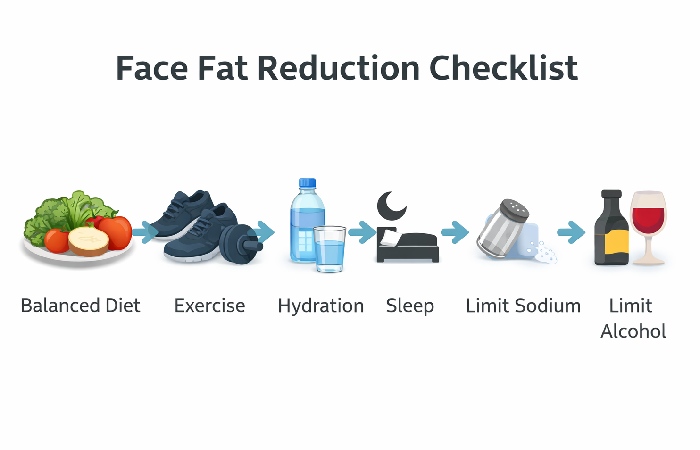
Use this quick checklist to stay consistent.
-
Maintain a healthy calorie deficit
-
Exercise regularly (cardio + strength training)
-
Drink enough water daily
-
Reduce sodium and processed foods
-
Sleep 7–9 hours per night
-
Limit alcohol consumption
These habits work together to support gradual fat loss.
How Long Does It Take to Lose Face Fat?
Facial slimming does not happen overnight. Results vary depending on genetics, weight loss pace, and lifestyle changes.
| Timeframe | Possible Changes |
|---|---|
| 1–2 weeks | Reduced facial puffiness |
| 3–6 weeks | Early facial slimming |
| 2–3 months | Noticeable fat reduction |
Weight loss research shows that fat reduction occurs gradually across the body, which is why patience is important during the process.
Facial Exercises for a Slimmer Face
Facial exercises are often promoted as a way to slim the face or reduce cheek fat. However, scientific evidence supporting this claim is limited. Medical guidance from WebMD’s review of facial fat loss notes that there is no strong evidence showing facial exercises directly reduce facial fat, although they may help improve muscle tone. Similarly, research summarized in a PubMed review on facial exercise effectiveness concludes that current evidence is insufficient to determine whether facial exercises significantly change facial fat or rejuvenation outcomes. For this reason, facial exercises are generally viewed as a supplement to healthy lifestyle habits rather than a primary method for reducing facial fat.
Example Facial Exercises
-
Jawline exercise: Tilt your head back slightly, push your lower jaw forward, hold for 10 seconds, repeat 10–15 times.
-
Cheek lift exercise: Smile widely, place your fingers on your cheekbones, lift your cheeks upward, hold for 10 seconds.
-
Neck stretch exercise: Sit upright, tilt your head backward, hold the stretch for 10–15 seconds, repeat several times.
These movements may help improve muscle tone and facial definition, but they primarily strengthen muscles rather than remove fat.
Common Mistakes When Trying to Lose Face Fat
1. Believing in Spot Reduction
Many people believe doing facial exercises will burn fat in the cheeks or jawline. However, the concept of spot reduction—losing fat from a specific area through targeted exercise—is widely considered a myth in exercise science. Research summarized in Healthline’s review of spot reduction research explains that the only reliable way to reduce facial fat naturally is through overall weight loss achieved with diet and exercise. Medical experts also emphasize that fat reduction occurs throughout the body rather than in isolated areas, as explained in WebMD’s medical overview of facial fat loss. Because of this, sustainable lifestyle changes are far more effective than trying to target fat loss in a single body part.
2. Following Extreme Diets
Crash diets can cause:
-
Muscle loss
-
Slower metabolism
-
Rapid weight regain
Gradual lifestyle changes are more sustainable.
3. Ignoring Sleep and Hydration
Poor sleep and dehydration can increase inflammation and fluid retention.
These factors can make the face appear puffier.
4. Expecting Instant Results
Healthy fat loss typically takes weeks or months, not days.
Who This Advice Is Best For
Best For
-
People with overall weight gain
-
Individuals experiencing facial puffiness
-
Anyone seeking natural fat reduction
Not Ideal For
-
People with purely genetic facial structure
-
Those expecting instant results
-
Individuals seeking surgical contouring
Some people explore cosmetic procedures such as buccal fat removal, which surgically removes fat pads from the cheeks to create a more defined facial shape.
Final Verdict
Face fat is influenced by body fat levels, genetics, and lifestyle habits.
There is no quick fix—but consistent healthy habits can gradually create a slimmer and more defined face.
Focus on:
-
Balanced nutrition
-
Regular exercise
-
Good sleep
-
Proper hydration
Over time, these changes can improve both facial appearance and overall health.
Frequently Asked Questions
Can you lose fat only in your face?
No. Fat loss occurs throughout the entire body rather than in one specific area.
Do facial exercises reduce face fat?
Facial exercises may improve muscle tone but do not directly burn fat.
How long does it take to lose face fat?
Most people notice facial changes within several weeks to a few months, depending on weight loss and lifestyle habits.
Why is my face fat even if I’m skinny?
Genetics and larger buccal fat pads can cause a fuller face even in slim individuals.
Does drinking water reduce face fat?
Water does not burn fat, but it can reduce bloating and water retention, which may make the face appear slimmer.
About Theglamourmedia
Theglamourmedia publishes practical, easy-to-understand content on health, technology, business, marketing, and lifestyle. Articles are based mainly on reputable, publicly available information, with AI tools used only to help research, organise, and explain topics more clearly so the focus stays on real‑world usefulness rather than jargon or unnecessary complexity.
Disclaimer:
This article is for general information only and is not a substitute for professional medical advice, diagnosis, or treatment. Always consult a qualified healthcare provider about your individual health, weight changes, or facial swelling.