

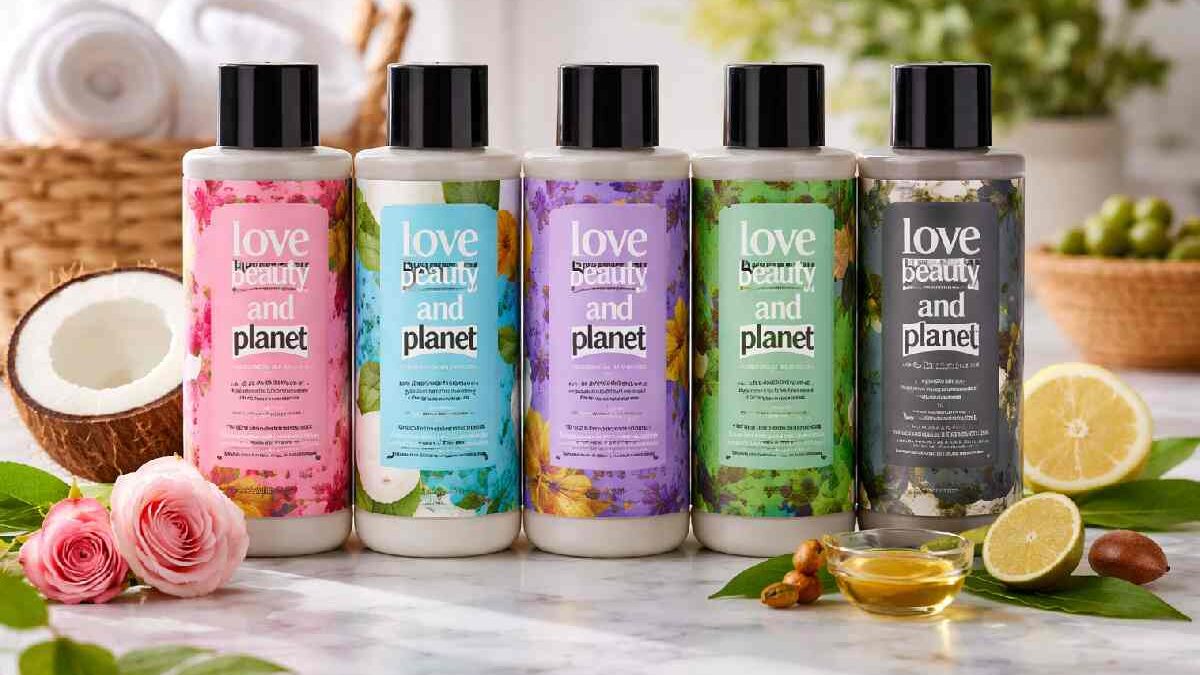
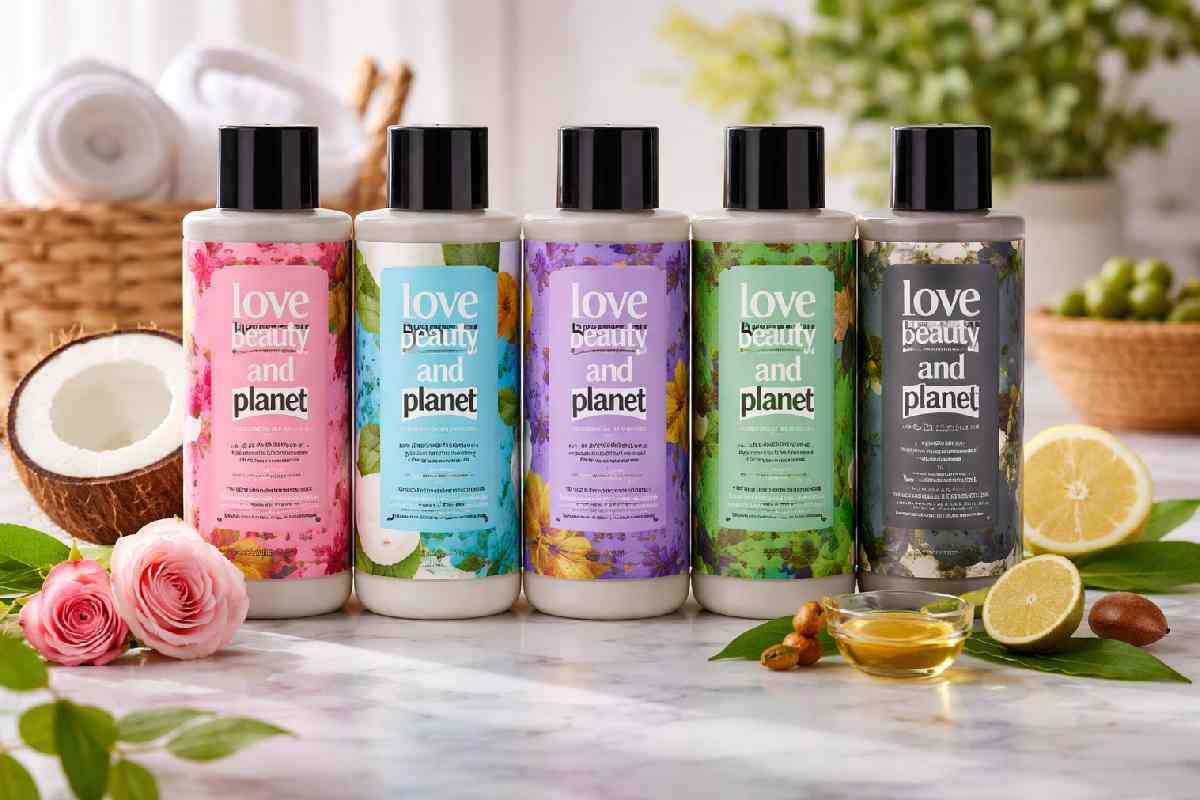
Walk into any Target or Walmart and you’ll spot Love Beauty and Planet immediately — the brightly coloured bottles with sustainability claims printed right on the label. “100% recycled plastic.” “Vegan.” “Fast-rinse technology.” It’s designed to feel good to buy.
But looking good on a shelf and performing well in the shower are two different things. This Love Beauty and Planet shampoo review cuts through the packaging and gets to what actually matters: do these shampoos work, which variant suits your hair type, and are the eco-credentials real — or is this just green marketing?
This guide covers six of the most popular Love Beauty and Planet shampoo variants, breaks down the ingredient quality honestly, scores the sustainability claims, and tells you exactly which hair types are likely to benefit and which ones probably won’t.
This review is for eco-conscious shoppers weighing up whether Love Beauty and Planet is worth switching to — and for anyone who’s already tried one variant and wants to know if another might work better for them.
Table of Contents
key Takeaways
- Best overall variant? → Murumuru Butter & Rose for dry/frizzy hair; Coconut Water & Mimosa for fine hair.
- Actually sulfate-free? → Partially — no SLS, but most variants contain SLES (sodium laureth sulfate), which is a milder sulfate. Not the same as fully sulfate-free.
- Are the eco claims legit? → Mostly yes on packaging and certifications; Fast-Rinse Technology is unverified marketing.
- Best for curly/textured hair? → No. Not rich enough. Better options exist at this price point.
- Worth the money? → For normal-to-dry straight or wavy hair: yes. For high-porosity, damaged, or coily hair: probably not.
What Is Love Beauty and Planet?
Love Beauty and Planet is a personal care brand owned by Unilever, launched in 2018 with a stated mission of “beauty that does good for the planet.” The range is positioned as an affordable, eco-conscious alternative to standard drugstore shampoos, priced typically between $8–$10 per bottle at mass retailers.
The brand’s core claims include 100% recycled plastic bottles, PETA-certified vegan and cruelty-free formulas, ethically sourced ingredients, and its proprietary “Fast-Rinse Technology” — a formulation approach the brand claims reduces shower rinse time and thus water usage.
The Unilever Ownership Question
This is the elephant in the bathroom. Unilever — one of the largest consumer goods conglomerates in the world — owns Love Beauty and Planet. For some eco-conscious shoppers, that context matters. Unilever has made global sustainability commitments through its Compass strategy, but the company has also faced criticism and regulatory scrutiny over greenwashing claims on other product lines.
What this means practically: the bottle-level sustainability claims (recycled plastic, vegan formulas) are verifiable and appear to be genuine. The broader brand narrative about “loving the planet” sits within a parent company that, like all major consumer multinationals, has a complex environmental record. It’s worth knowing — but it doesn’t invalidate the product-specific facts.
Love Beauty and Planet Shampoo Ingredients: What’s Actually In There?
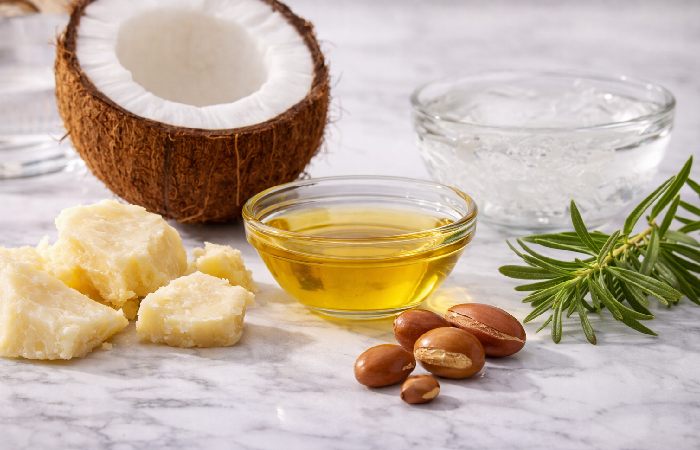
Before reviewing performance, it’s worth understanding what the formulas actually contain — and what the ingredient claims really mean.
The “Sulfate-Free” Question
But many variants still contain sodium laureth sulfate (SLES) — a closely related, milder sulfate that’s gentler on hair and scalp but is technically still a sulfate. For most hair types, SLES is well-tolerated and produces adequate lather. For those with sensitive scalps or chemically treated hair who specifically need a sulfate-free formula, the distinction matters. Always check the specific variant’s full ingredient list before assuming it’s fully sulfate-free.
Key Active Ingredients Explained
Murumuru seed butter — Rich in lauric and myristic fatty acids, murumuru butter penetrates the hair shaft to reduce protein loss and soften cuticles. It’s a genuinely effective conditioning agent, not just a marketing name.
Argan oil — High in oleic acid and linoleic acid, argan oil coats the cuticle to reduce frizz and add shine. The concentration in shampoo formulas (vs. leave-in treatments) is typically low, so it functions more as a surface-level conditioning agent than a deep treatment.
Coconut water — Primarily a humectant in this context — it attracts moisture to the hair shaft. Not the same as coconut oil; lighter, more suitable for fine hair.
Tea tree oil — A natural antimicrobial with documented efficacy against Malassezia (the yeast associated with dandruff and scalp irritation), according to research reviewed by the National Center for Complementary and Integrative Health. Works best at meaningful concentrations; trace amounts in shampoo have limited efficacy.
Ylang ylang flower oil — Primarily fragrance function; has mild scalp-conditioning properties but is used mainly for scent profile.
Love Beauty and Planet Shampoo Variants: Which One Is Right for You?
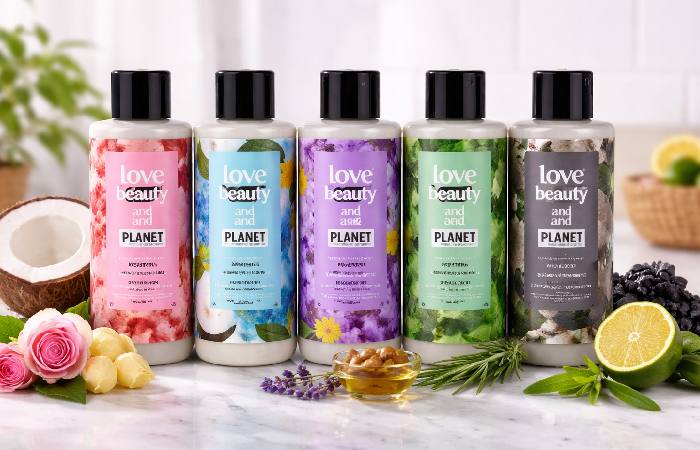
The product line spans six core variants, each targeting a different hair concern. Here’s a variant-by-variant breakdown with honest performance assessment.
Murumuru Butter & Rose (Blooming Color / Moisture)
Target hair type: Dry, frizzy, colour-treated hair Key ingredients: Murumuru seed butter, Bulgarian rose water
The most popular and most reviewed variant in the range. The scent — Bulgarian rose with warm base notes — is genuinely pleasant and lingers for hours, which is one of the most consistent points of praise across reviewers.
Performance: delivers moderate moisture and frizz control for straight to wavy hair. Works well for colour-treated hair that needs a gentle cleanse without heavy stripping. For very dry or high-porosity hair, it provides noticeable but not exceptional conditioning — it’s better used paired with a separate deep conditioning treatment.
Honest verdict: The stand-out of the line. Best scent, solid performance for normal-to-dry hair. Not a replacement for a dedicated hair mask if you have significant damage.
Coconut Water & Mimosa Flower (Volume and Bounty)
Target hair type: Fine, limp, or low-porosity hair Key ingredients: Coconut water, Mimosa flower
Lighter than the Murumuru variant and designed not to weigh fine hair down. The coconut water base keeps it hydrating without heaviness. Lathers well and rinses cleanly.
The mimosa flower note gives it a soft, slightly floral scent — less polarising than some of the stronger fragrances in the range.
Honest verdict: The best choice for fine or straight hair that needs volume without buildup. Not for dry or damaged hair.
Argan Oil & Lavender (Smooth and Serene)
Target hair type: Frizzy, coarse, or humidity-prone hair Key ingredients: Argan oil, lavender essential oil
The lavender scent is the strongest in the range — noticeable immediately and for some time after washing. If you’re sensitive to fragrance, this is the variant most likely to be overpowering.
Argan oil at shampoo-stage concentration provides surface shine and some frizz reduction, but don’t expect the results you’d get from a dedicated argan oil treatment. It’s a light smoothing effect, not a transformation.
Honest verdict: Good for normal frizzy hair or those who love lavender. Not for anyone with fragrance sensitivity or who needs serious moisture delivery.
Tea Tree & Vetiver (Radical Refresher / Scalp Care)
Target hair type: Oily scalp, scalp buildup, or those prone to dandruff Key ingredients: Tea tree oil, vetiver root extract
The most functional variant in the range rather than the most pleasant-smelling. The tea tree oil provides genuine scalp-clarifying benefits for those dealing with oiliness or mild scalp irritation. Vetiver adds a grounding, earthy note that’s very different from the rest of the line.
Not a treatment for clinical dandruff (for which you’d need zinc pyrithione or ketoconazole), but as a scalp maintenance shampoo it performs well. Rinses cleanly and doesn’t leave any residue.
Honest verdict: Best for oily scalp types. Don’t expect it to treat diagnosed scalp conditions — that’s not what it’s designed for.
Hope & Repair (Strengthening)
Target hair type: Damaged, broken, or over-processed hair Key ingredients: Coconut oil, ylang ylang flower oil
The variant with the highest expectations and the most mixed reviews. “Repair” claims in drugstore haircare are generally worth approaching with caution — no shampoo can structurally repair chemically damaged hair (that requires the disulfide bonds to be reformed, which requires keratin-based treatments or professional products).
What this shampoo can do: gently cleanse damaged hair without excessive stripping, and provide some surface smoothing via coconut oil. The ylang ylang scent is pleasant and medium-strength.
Honest verdict: A gentle choice for damaged hair, but the “repair” claim overpromises. Manage expectations. Pair with a bond-building treatment if your hair is significantly bleach-damaged or chemically over-processed.
Scalp Care Charcoal & Tea Tree
Target hair type: Oily scalp, product buildup, congested roots Key ingredients: Activated charcoal, tea tree oil
The newest and more targeted scalp variant. Activated charcoal is an adsorbent — it binds to excess sebum, product residue, and impurities on the scalp surface. Combined with tea tree’s antimicrobial properties, this is the most focused clarifying option in the range.
Works best as a weekly clarifying shampoo rather than a daily wash. Using it too frequently can disrupt the scalp’s natural oil balance.
Honest verdict: Genuinely useful for scalp-heavy concerns. Better used 1–2x per week rather than as your only shampoo.
Variant-by-Hair-Type Matching Table
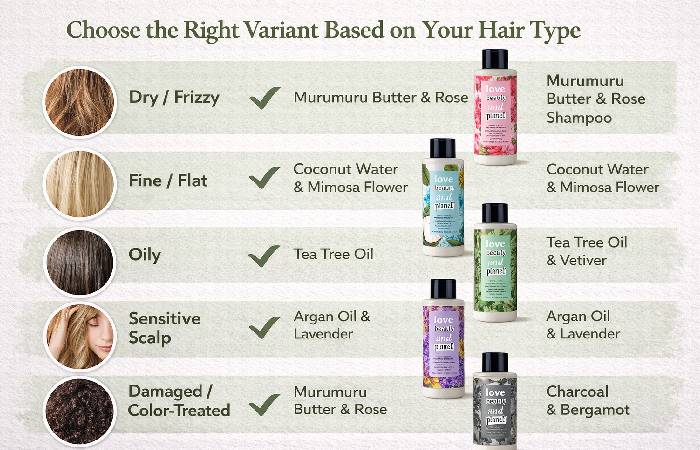
| Hair Type / Concern | Best Variant | Why |
|---|---|---|
| Dry / Frizzy | Murumuru Butter & Rose | Murumuru butter softens and moisturises without heaviness |
| Fine / Limp | Coconut Water & Mimosa | Lightweight formula adds volume without weighing hair down |
| Colour-Treated | Murumuru Butter & Rose | Gentle cleanse; no harsh stripping agents |
| Oily Scalp | Tea Tree & Vetiver | Tea tree oil clarifies without over-drying mid-lengths |
| Scalp Buildup | Scalp Care Charcoal | Activated charcoal adsorbs excess sebum and product residue |
| Frizzy / Coarse | Argan Oil & Lavender | Surface smoothing via argan oil; reduces humidity frizz |
| Damaged / Over-processed | Hope & Repair | Gentlest cleanse; manage expectations on “repair” claims |
| Curly / High-Porosity | None strongly recommended | Range lacks the moisture density needed for textured hair |
Sustainability Claims: What’s Real, What’s Marketing?
Love Beauty and Planet makes several sustainability claims. Here’s an honest breakdown of what holds up and what doesn’t.
Verified and credible:
- 100% recycled plastic (PCR) bottles — Independently verifiable. This is a genuine differentiator against most drugstore competitors.
- No plastic cap (some variants) — Reduces plastic waste per unit.
- Vegan formulas — Confirmed; no animal-derived ingredients.
- PETA cruelty-free certification — Legitimate third-party certification.
Claimed but not independently verified:
- Fast-Rinse Technology — The brand states that its rich conditioners use a “fast-rinse” technology so they rinse out more quickly, helping to save water. There is no published independent study verifying this claim, and the real-world impact depends heavily on individual shower behaviour. Treat it as a marketing claim unless independently validated.
- Ethically sourced ingredients — Claimed for Bulgarian rose and murumuru butter; supply chain transparency documentation is not publicly detailed. “Ethically sourced” without third-party verification (like Rainforest Alliance or Fair Trade certification) is a weak claim.
As the Environmental Working Group’s Skin Deep database notes, ingredient transparency and verifiable sourcing are distinct from general brand sustainability positioning — a distinction worth applying to any “eco” beauty purchase.
Pros and Cons Summary
What Love Beauty and Planet gets right:
- Genuinely strong, long-lasting fragrance across all variants
- Accessible price point (8–10) for a brand with real certifications
- 100% recycled packaging is a real differentiator at this price point
- Wide variant range covering most mainstream hair concerns
- Lathers reasonably well despite lower-sulfate formulas
- Good performance for normal to moderately dry straight and wavy hair
Where it falls short:
- “Sulfate-free” is misleading for variants containing SLES — always verify the specific ingredient list
- Not moisturising enough for curly, coily, or high-porosity hair types
- Fast-Rinse Technology is an unverified marketing claim
- Some users report waxy buildup with prolonged use, particularly the richer variants
- The “repair” claim on Hope & Repair overpromises what any shampoo can deliver
- Fragrance intensity is polarising — strong enough to bother sensitive skin users in some variants
Common Mistakes People Make with This Brand
- Choosing a variant by scent rather than hair type — The rose and lavender variants smell incredible. But scent has nothing to do with whether the formula suits your hair structure. Use the matching table above.
- Expecting salon-level repair from a $9 shampoo — The Hope & Repair variant is a gentle cleanse, not a Olaplex-level bond repair system. Manage expectations accordingly.
- Using the Charcoal variant daily — Activated charcoal is a clarifying agent. Daily use can strip the scalp’s natural moisture balance. Use it as a weekly reset, not your primary wash.
- Buying for curly or textured hair based on the eco credentials — The sustainability story is appealing, but the formulas don’t deliver the moisture density that high-porosity or coily hair types require. The eco appeal doesn’t change the formulation reality.
- Dismissing the brand purely because of Unilever — The product-level claims (recycled packaging, vegan, cruelty-free) are verified regardless of parent company size. Judging the product by corporate ownership alone misses what the formulas actually do or don’t deliver.
Who This Is For — and Who Should Look Elsewhere
Love Beauty and Planet shampoo works well for:
- Eco-conscious shoppers who want genuine certifications at a drugstore price point
- Normal, straight, or wavy hair types managing moderate dryness or frizz
- Oily scalp types (Tea Tree or Charcoal variants specifically)
- Colour-treated hair needing a gentle, non-stripping cleanse
- Anyone switching from conventional shampoos who wants a “cleaner” formula without spending salon prices
Consider a different brand if you have:
- Curly, coily, or Type 3–4 hair — you need significantly richer moisture delivery than this range provides
- A clinically diagnosed scalp condition (dandruff, seborrheic dermatitis, psoriasis) — therapeutic shampoos with active concentrations of zinc pyrithione or ketoconazole are more appropriate
- Fragrance sensitivity — several variants have strong, persistent fragrance profiles
- Severely bleach-damaged or chemically over-processed hair — this range won’t provide the bond repair or protein treatment these hair types need
Final Verdict: Is Love Beauty and Planet Shampoo Worth It?
The honest answer is: it depends on your hair type and what you’re expecting from it.
For normal to moderately dry straight or wavy hair, this Love Beauty and Planet shampoo review lands positively. The formulas are genuinely well-made for their price point, the sustainability credentials are mostly real, and the fragrance experience is exceptional across the range. The Murumuru Butter & Rose variant in particular delivers consistent results for its intended use case.
But the brand oversells in two places. “Repair” is not what a $9 shampoo does. And “sulfate-free” needs to be verified variant by variant — the presence of SLES is often glossed over in both brand marketing and reviews.
If you have textured, high-porosity, or significantly damaged hair, keep looking. The eco story is appealing, but the formula reality is that this range was built for straight-to-wavy hair at moderate moisture levels. That’s not a failing — it’s a honest limitation most reviews don’t say clearly enough.
At $8–$10 per bottle, it’s one of the better-value options in the eco-conscious drugstore tier — for the right hair type.
Frequently Asked Questions
Q: Is Love Beauty and Planet shampoo actually sulfate-free?
A: Partially. Most variants do not contain sodium lauryl sulfate (SLS), the harsher conventional detergent. However, many variants contain sodium laureth sulfate (SLES), a milder related sulfate that produces good lather and is generally well-tolerated. If you need a fully sulfate-free formula — for example, for chemically relaxed or keratin-treated hair — check the specific ingredient list of the variant you’re considering before purchasing.
Q: Is Love Beauty and Planet good for curly hair?
A: Generally no. While some users with loose waves report acceptable results with the Murumuru Butter variant, the formulas lack the moisture density and slip that Type 2C–4C curl patterns require. For curly and coily hair, look for shampoos specifically formulated for high-porosity or textured hair, ideally with higher concentrations of shea butter, castor oil, or glycerin.
Q: Are Love Beauty and Planet’s sustainability claims real?
A: Mostly. The 100% recycled plastic packaging and PETA vegan/cruelty-free certifications are verified and genuine. The “Fast-Rinse Technology” claim — that formulas rinse out faster to save water — has no published independent verification and should be treated as a marketing claim. Ethically sourced ingredients are claimed but lack third-party certification.
Q: Which Love Beauty and Planet shampoo is best for oily hair?
A: Tea Tree & Vetiver is the most effective for oily scalp types — tea tree oil provides antimicrobial and clarifying action without over-drying. The Scalp Care Charcoal variant is the stronger clarifying option but is better used 1–2 times per week rather than daily.
Q: Does Love Beauty and Planet shampoo cause buildup?
A: Some users report a waxy or heavy feeling after prolonged use, particularly with richer variants like Murumuru Butter. This is more common if the shampoo isn’t fully emulsified and rinsed, or if you have fine hair using a heavy-moisture formula. A monthly clarifying wash (with the Charcoal variant or a dedicated clarifier) typically resolves buildup.
Q: How does Love Beauty and Planet compare to OGX?
A: Both are mid-range drugstore brands with ingredient-forward marketing. OGX tends to have higher fragrance oil concentrations and silicone-based conditioning agents that deliver more immediate slip and shine. Love Beauty and Planet has a stronger ethical/sustainability credentials story (recycled packaging, vegan certification). For performance alone, OGX edges ahead for very dry or textured hair; for eco-conscious buyers, Love Beauty and Planet is the more defensible choice.
About Theglamourmedia
Theglamourmedia.com publishes practical, easy-to-understand content on health, technology, business, marketing, and lifestyle. Articles are based mainly on reputable, publicly available information, with AI tools used only to help research, organise, and explain topics more clearly so the focus stays on real‑world usefulness rather than jargon or unnecessary complexity.
Disclaimer
The products and ingredients mentioned in this review are discussed for general informational purposes only. Results can vary widely depending on your hair type, length, chemical treatments, and scalp condition. This content does not replace professional medical, dermatological, or haircare advice. Always review the full ingredient list, patch-test new products, and consult a qualified professional if you have concerns about allergies, scalp issues, or hair loss.