

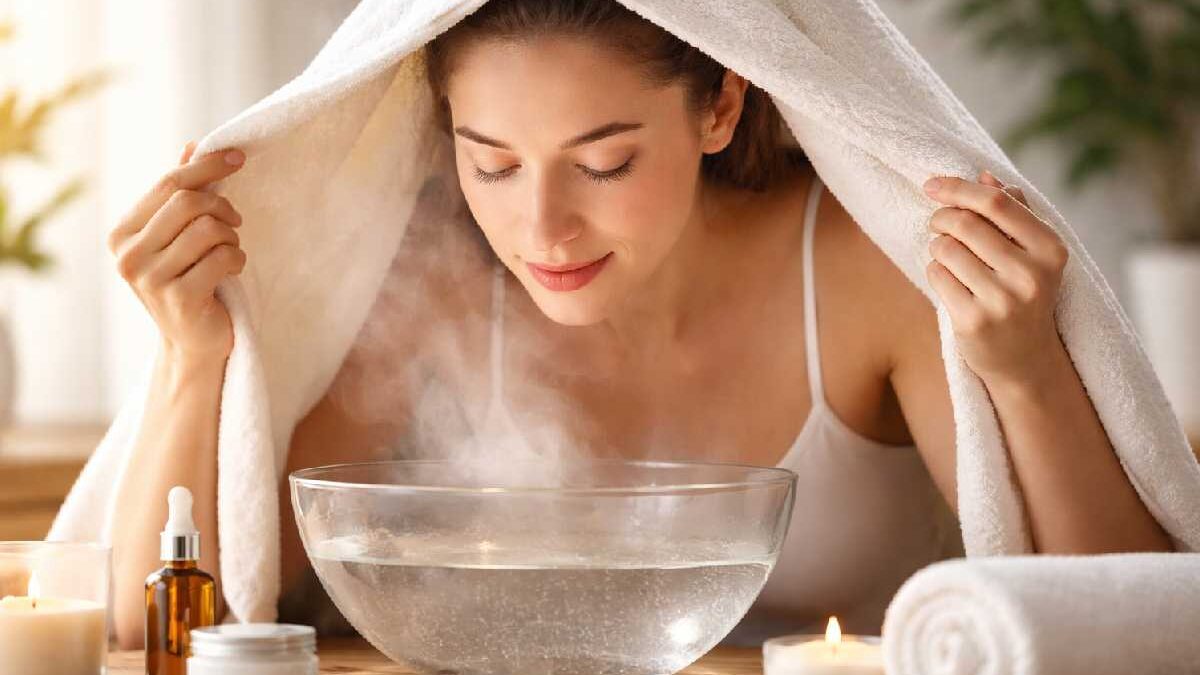
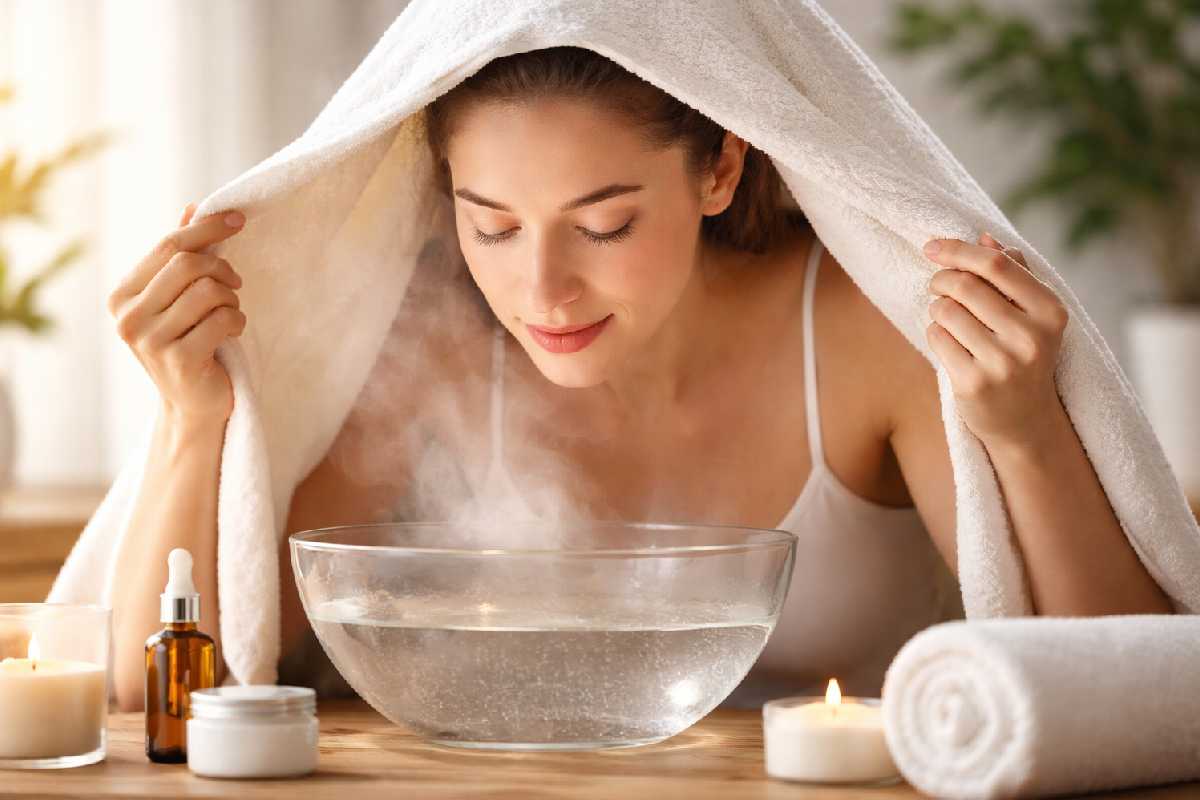
Your skincare routine might include the best serums money can buy. But if your skin can’t absorb them properly, you’re leaving results on the table.
That’s where steam for face comes in. Facial steaming is one of the oldest, most accessible skincare techniques — and it works because it addresses a problem most products can’t solve on their own: surface-level congestion that blocks everything you apply afterward.
This guide covers everything you need to know about facial steaming — the real benefits, three methods to try at home, which one suits your skin type, what the science actually says about pores, and the post-steam routine that makes the whole process worth doing.
Whether you’ve never tried steaming or you’ve been doing it for years, this guide will help you do it better, safer, and smarter.
Table of Contents
Steam for Face at a Glance
- What is it? → A skincare practice that uses warm steam to loosen pore debris, boost circulation, and prep skin for product absorption
- Why does it work? → Heat softens the outer skin layer (stratum corneum) and increases blood flow — it does NOT “open” pores
- Best method? → Bowl method (most accessible), steamer device (most consistent), or warm towel (gentlest)
- How often? → Once per week for most skin types; adjust based on sensitivity
- Critical rule? → What you do in the 60 seconds AFTER steaming matters more than the steam itself
What Is Facial Steaming?
Facial steaming is a skincare practice where you expose your face to warm, moist air for 5 to 10 minutes. It works by softening the stratum corneum — the outermost layer of dead skin cells — which loosens trapped sebum, dirt, and debris inside pores. The heat also triggers vasodilation, increasing blood flow and nutrient delivery to the skin’s surface.
Here’s something worth knowing: pores don’t actually open and close. They don’t have muscles. This is one of the most persistent myths in skincare. What steam really does is soften the buildup sitting inside your pores and the layer of dead cells on top, making everything easier to cleanse away.
According to dermatologists at the Cleveland Clinic, facial steaming can be a helpful addition to your skincare routine when done in moderation — but it’s not a miracle fix, and overdoing it can backfire.
7 Benefits of Steam for Face
1. Deep Pore Cleansing
Steam softens the oily plugs, dead skin, and environmental debris lodged inside pores. This doesn’t mean pores “open up” — it means the material inside them becomes easier to remove with gentle cleansing or a soft washcloth.
2. Improved Blood Circulation
The warmth from steam triggers vasodilation — the widening of blood vessels beneath the skin. This increases blood flow, delivering more oxygen and nutrients to skin cells. The result is that temporary, healthy flush you notice right after a session.
3. Enhanced Product Absorption
This is where steaming earns its real value. By softening the stratum corneum, steam temporarily increases skin permeability. Serums, toners, and moisturizers applied immediately after steaming can penetrate deeper and work more effectively.
4. Hydration Boost
Warm moisture helps hydrate the surface of your skin and can encourage natural sebum production in balanced amounts. For dry skin types, a short steaming session followed by a rich moisturizer can create noticeable softness.
5. Blackhead Loosening
Blackheads form when sebum and dead cells oxidize inside a pore. Steam softens this plug, making blackheads easier to remove gently — without aggressive squeezing that can cause scarring or infection.
Important: Steam loosens blackheads. It does not give you a free pass to pick at your face. Leave deep extractions to a licensed esthetician.
6. Sinus Relief
Warm facial steam also doubles as a natural decongestant. The moist heat helps loosen mucus in the nasal passages, which is why steaming often relieves sinus pressure and mild congestion — a benefit that goes beyond skincare.
7. Relaxation and Stress Reduction
There’s a reason spas have used steam for centuries. The warmth, the ritual, the quiet few minutes — facial steaming can lower stress and create a meditative pause in your day. And lower stress means fewer cortisol-driven breakouts over time.
How to Steam Your Face at Home (3 Methods)
Method 1 — Bowl and Towel Method (Step-by-Step)
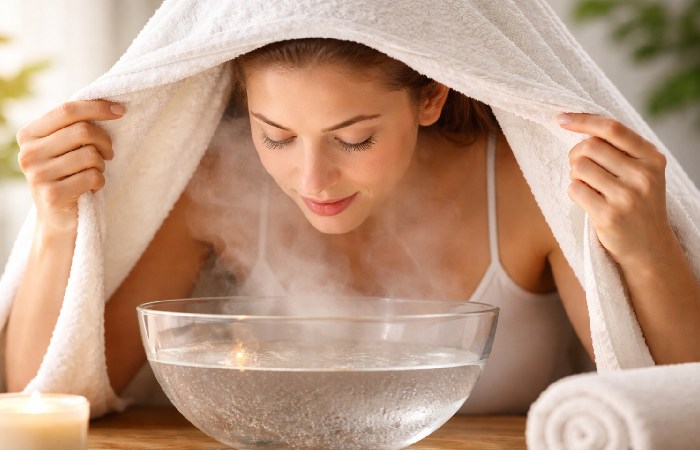
This is the most popular and accessible approach.
- Cleanse your face thoroughly. Remove all makeup, SPF, and surface dirt first.
- Boil water and pour it into a large, heat-proof glass or ceramic bowl. Let it cool for 60–90 seconds — never use boiling water directly.
- Lean over the bowl at a distance of 8–12 inches (20–30 cm).
- Drape a towel over your head and the bowl to create a tent that traps the steam.
- Close your eyes and breathe naturally for 5–10 minutes.
- Stop immediately if you feel stinging, burning, or discomfort.
- Pat dry gently and move to your post-steam routine within about 1–2 minutes while your skin is still warm and slightly damp.
Method 2 — Facial Steamer Device
Dedicated facial steamers produce a consistent, controlled stream of fine mist. They’re convenient and reduce the risk of burns compared to the bowl method.
- Follow the manufacturer’s instructions for water level and warm-up time.
- Position the nozzle 6–10 inches from your face.
- Session duration: 5–10 minutes (most devices auto-shut off).
- Cleaning tip: Sanitize the water tank regularly. Mold and bacteria can build up in humid environments and cause breakouts.
Method 3 — Warm Towel Method (Gentlest Option)
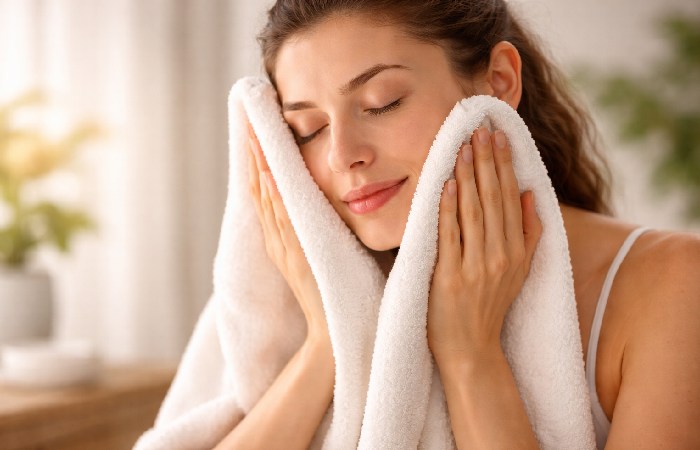
Many dermatologists actually prefer this method for most people. It delivers gentle warmth without the intensity of direct steam.
- Soak a clean, soft washcloth in warm (not hot) water.
- Wring out the excess.
- Press the towel gently against your face for 1–2 minutes.
- Repeat 2–3 times with re-warmed water.
This method is ideal for sensitive or easily irritated skin, or anyone nervous about the heat involved in traditional steaming. If you have rosacea or another heat-triggered condition, talk to your dermatologist before trying even gentle warm-towel compresses on your face.
Steaming Methods Comparison
| Feature | Bowl + Towel | Facial Steamer | Warm Towel |
|---|---|---|---|
| Cost | Free (items at home) | $20–$80+ | Free |
| Steam Consistency | Decreases as water cools | Steady, controlled | Minimal/gentle |
| Burn Risk | Moderate (boiling water) | Low (regulated temp) | Very low |
| Best For | Regular steaming sessions | Frequent use, convenience | Sensitive skin, beginners |
| Herb/Oil Compatible | Yes | Check device manual | Not practical |
| Portability | Needs kitchen/bathroom | Needs outlet + counter | Anywhere |
Best Herbs and Essential Oils for Facial Steaming
Adding herbs or essential oils to your steam can enhance the experience — but use them sparingly. Essential oils are highly concentrated; 1–3 drops in a full bowl is enough. Never apply essential oils directly to your skin before steaming.
For Oily / Acne-Prone Skin
- Tea tree oil (1–2 drops) — antibacterial properties
- Fresh rosemary or basil — helps regulate excess oil
- Peppermint — provides a cooling, clarifying sensation
For Dry / Mature Skin
- Chamomile flowers (dried) — soothing and anti-inflammatory
- Frankincense essential oil (1 drop) — promotes cell regeneration
- Rose petals — gentle hydration and calming aroma
For Sensitive / Calming
- Lavender (dried buds or 1 drop essential oil) — calming, anti-inflammatory
- Calendula petals — gentle and non-irritating
- Oat sachets — soothing for reactive skin
Safety note: If you have asthma or respiratory sensitivity, avoid essential oils in steam entirely. Stick to plain water or gentle dried herbs only.
How Often Should You Steam Your Face? (By Skin Type)
One of the biggest mistakes with facial steaming is doing it too often. More isn’t better here — frequency depends entirely on your skin type.
| Skin Type | Recommended Frequency | Session Duration | Key Advice |
|---|---|---|---|
| Oily / Acne-Prone | 1–2 times per week | 8–10 minutes | Helps regulate sebum; follow with a lightweight, non-comedogenic moisturizer |
| Combination | Once per week | 7–8 minutes | Focus steam time on the oily T-zone; be gentler on dry cheeks |
| Normal | Once per week | 5–8 minutes | Ideal maintenance frequency; pair with a hydrating serum afterward |
| Dry | Once every 7–10 days | 5–7 minutes | Keep sessions short; prioritize a rich moisturizer immediately after |
| Sensitive / Reactive | Once every 2 weeks (or avoid) | 3–5 minutes max | Consider the warm towel method instead; stop at the first sign of redness |
According to WebMD, over-steaming can strip the skin of its natural oils and compromise the moisture barrier, leading to dryness and irritation even in oily skin types.
Risks and Side Effects of Facial Steaming
Steaming is generally safe for healthy skin — but it’s not risk-free. Understanding the downsides helps you avoid them.
Burn Risk and Overheating
This is the most common injury. Leaning too close to boiling water or using steam that’s too hot can cause thermal burns. Always let boiled water cool for at least 60 seconds, and maintain a minimum distance of 8–12 inches.
Skin Barrier Damage (Transepidermal Water Loss)
Over-steaming — either too long or too frequently — can weaken the skin barrier. When the stratum corneum is repeatedly softened and not properly re-sealed with moisturizer, it leads to increased transepidermal water loss (TEWL). This means your skin actually loses hydration faster than normal, causing dryness, tightness, and flaking.
Worsening Inflammatory Conditions
Heat is a well-documented trigger for rosacea, eczema flare-ups, and seborrheic dermatitis. The National Rosacea Society identifies heat exposure and hot baths as among the top environmental triggers for rosacea flare-ups. If you have any of these conditions, facial steaming is generally not recommended.
Post-Inflammatory Hyperpigmentation
For individuals with darker skin tones or those prone to hyperpigmentation, the inflammation caused by excessive heat can trigger an increase in melanin production. This can lead to dark spots or patches — an often-overlooked risk that competitors rarely mention.
Who Should Avoid Facial Steaming?
Best for:
- Normal, oily, and combination skin types
- People dealing with mild congestion or dull skin
- Anyone looking to boost product absorption naturally
Not for / Proceed with extreme caution:
- Active rosacea
- Severe inflammatory acne (cystic)
- Eczema or dermatitis flare-ups
- Broken capillaries or spider veins on the face
- Sunburned or windburned skin
- Open wounds, cuts, or post-procedure skin
When in doubt, skip the steam and use the warm towel method instead. Or consult a dermatologist before making facial steaming a regular habit.
The Post-Steam Skincare Routine (The 60-Second Window)
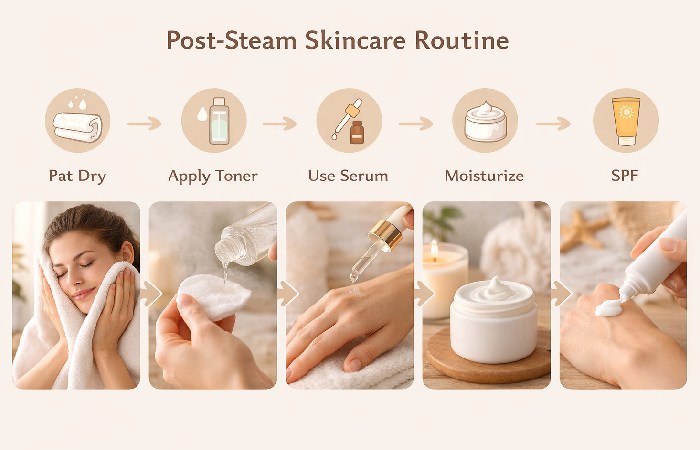
Here’s what most guides get wrong: they tell you to “apply moisturizer after steaming” and leave it at that. But roughly the first 1–2 minutes immediately after steaming is when your skin is most receptive — and following a structured routine during this window is what separates a good steam session from a wasted one.
Step 1 — Gentle Pat Dry
Use a soft, clean towel to lightly pat — not rub — your face. Leave your skin slightly damp.
Step 2 — Apply Toner or Essence
A hydrating toner or essence helps rebalance your skin’s pH after heat exposure. Apply with clean hands or a cotton pad.
Step 3 — Serum (While Skin Is Still Damp)
This is the most important step. Serums with hyaluronic acid, niacinamide, or vitamin C absorb significantly better into freshly steamed skin. Apply while your face still feels slightly moist.
Step 4 — Moisturizer to Seal
Lock everything in with a moisturizer suited to your skin type. This step re-seals the skin barrier and prevents the transepidermal water loss that can happen after steaming.
Optional Step 5 — SPF (If Heading Outdoors) Freshly steamed skin is more sensitive to UV exposure. If you’re steaming in the morning or before going outside, always apply broad-spectrum sunscreen as your final step.
Common Mistakes When Steaming Your Face
- Using boiling water — Let it cool for at least 60–90 seconds. The steam should feel warm, never painful.
- Steaming too long — More than 10 minutes can strip oils and damage your barrier. Set a timer.
- Steaming too frequently — Daily steaming is a fast track to irritation. Stick to once a week for most skin types.
- Skipping post-steam moisturizer — Steaming without sealing moisture afterward can leave skin drier than before.
- Aggressive extractions afterward — Steam softens pore plugs, but digging at your face with fingernails causes scarring and infection. Use a sterilized comedone extractor gently — or leave it to a professional.
- Steaming over makeup or SPF — Always cleanse first. Steaming over residue pushes impurities deeper into your pores.
- Ignoring your skin type — What works for oily skin can damage sensitive skin. Use the frequency table above as your starting point.
Final Verdict — Is Steam for Face Worth It?
Yes — with a caveat. Facial steaming is a genuinely effective way to deep-cleanse, boost circulation, and dramatically improve how well your skincare products absorb. But the real benefit comes from how you do it and what you do after, not just the steam itself.
Follow the right method for your skin type. Keep sessions short and infrequent. And treat the 60 seconds after steaming as the most important part of your entire routine.
Done right, steam for face is one of the simplest, most affordable upgrades you can make to your skincare regimen — no expensive devices required.
Frequently Asked Questions
Q: Is steaming good for your face?
A: Yes, when done correctly. Steaming helps deep-cleanse pores, improve blood circulation, and enhance the absorption of serums and moisturizers. However, overdoing it can strip natural oils and damage the skin barrier, so moderation is key.
Q: How often should you steam your face?
A: Once per week is ideal for most skin types. Oily skin may tolerate twice weekly, while sensitive or dry skin should steam no more than once every 7–10 days. Always follow with moisturizer.
Q: Does steam actually open your pores?
A: No. Pores don’t have muscles and cannot open or close. What steam does is soften the stratum corneum — the outer layer of dead skin — and loosen the sebum and debris trapped inside pores, making them easier to cleanse.
Q: Can facial steaming cause acne?
A: Steaming itself doesn’t cause acne. However, steaming over unwashed skin can push dirt deeper into pores, and aggressive post-steam extractions can introduce bacteria. Always cleanse before steaming and avoid picking afterward.
Q: What should I put on my face after steaming?
A: Follow a structured post-steam routine: (1) pat dry gently, (2) apply a hydrating toner, (3) apply serum while skin is still damp, and (4) seal with moisturizer. This window is when your skin is most receptive to active ingredients.
Q: Is facial steaming safe for sensitive skin? A: It can be, but with caution. Use the warm towel method instead of direct steam, limit sessions to 3–5 minutes, and avoid essential oils. If you have rosacea, eczema, or broken capillaries, consult a dermatologist before trying facial steaming.
About Theglamourmedia
Theglamourmedia.com publishes practical, easy-to-understand content on health, technology, business, marketing, and lifestyle. Articles are based mainly on reputable, publicly available information, with AI tools used only to help research, organise, and explain topics more clearly so the focus stays on real‑world usefulness rather than jargon or unnecessary complexity.
Disclaimer
This guide is for general informational purposes only and is not a substitute for professional medical advice, diagnosis, or treatment. Always consult a dermatologist or qualified healthcare provider about your individual skin concerns, existing conditions (such as rosacea, eczema, or severe acne), and before starting any new skincare technique, including facial steaming. Never ignore or delay seeking professional advice because of something you have read here.