

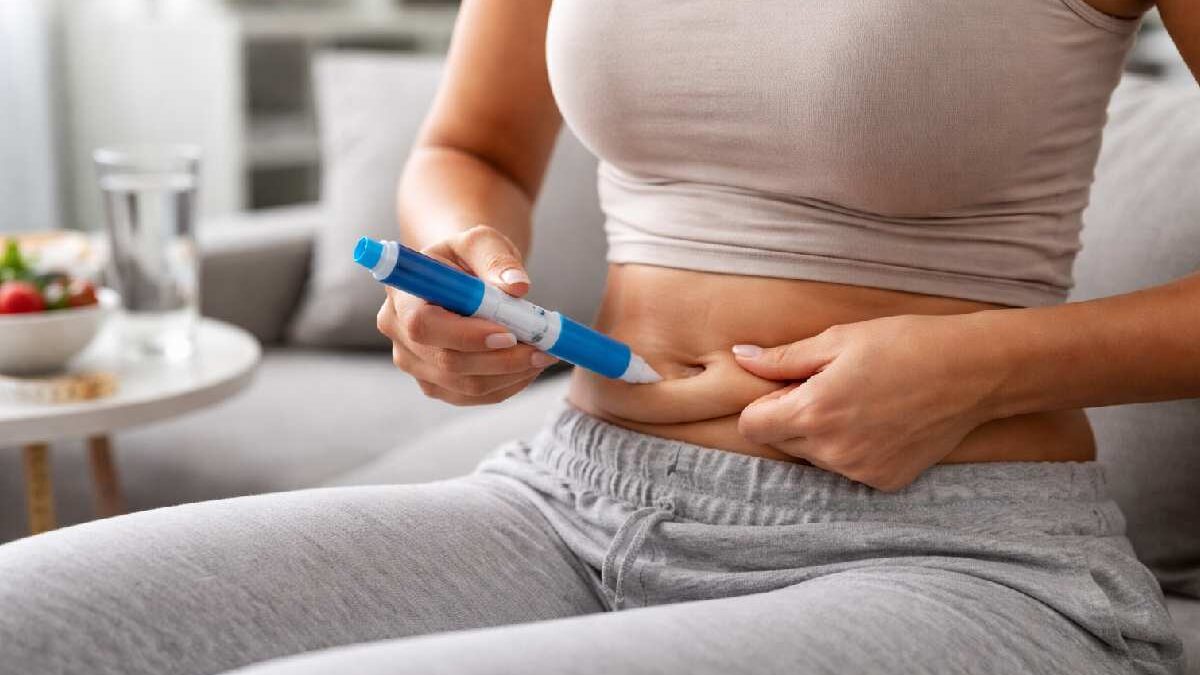

The numbers are striking. In clinical trials, people taking Wegovy lost an average of nearly 15% of their body weight over 68 weeks. That’s not marketing copy — that’s the result from the STEP 1 trial, published in the New England Journal of Medicine. For someone weighing 100 kg, that’s 15 kg gone.
But weight loss drugs have made big promises before. So what makes Wegovy weight loss different from the countless products that came before it? And more practically — what does the evidence actually say about who it works for, how well it works, and what happens when you stop?
This guide answers those questions using clinical trial data, not brand messaging.
Table of Contents
Key Takeaways
- What is Wegovy? → A weekly injectable medication (semaglutide 2.4 mg) approved specifically for chronic weight management.
- How much weight can you lose? → An average of 14.9% body weight in 68 weeks in the STEP 1 trial — roughly 15 kg for a 100 kg starting weight.
- How does it work? → It mimics a natural gut hormone (GLP-1) that signals fullness to the brain and slows gastric emptying.
- What are the main side effects? → Nausea (affects ~44%), vomiting (~24%), diarrhoea (~30%) — mostly during dose escalation.
- Is the weight loss permanent? → No. Most people regain significant weight after stopping without lifestyle support.
What Is Wegovy? The Science of Satiety

Some clinics also offer Wegovy through specialised weight‑management services, and you may see programmes such as AgelessRx’s Wegovy offering mentioned in patient communities and online research. These services can help with access and monitoring, but they should always complement—not replace—care from your own licensed healthcare provider.
To understand why it works, you need to understand GLP-1 — a hormone your gut releases naturally after eating. GLP-1 travels to the brain and signals satiety: you’ve eaten, you can stop. It also slows the rate at which your stomach empties, prolonging the feeling of fullness.
Here’s the problem for many people with obesity: this signal is blunted, or the brain doesn’t respond to it normally. Wegovy is structurally 94% identical to natural human GLP-1, but with one critical modification — it resists breakdown by enzymes in the body, allowing a once-weekly injection to maintain elevated GLP-1 activity consistently.
The result is a reduction in appetite, reduced food cravings, and slower gastric emptying — without requiring willpower to suppress hunger consciously. The brain genuinely receives fewer hunger signals.
This is confirmed by the European Medicines Agency’s EPAR for Wegovy, which states the mechanism of action involves GLP-1 receptor activation in both the hypothalamus (appetite regulation) and the gut.
Wegovy vs. Ozempic: Same Molecule, Different Missions
This is one of the most common points of confusion — and it’s worth being precise.
Both Wegovy and Ozempic contain semaglutide. They are made by the same manufacturer, Novo Nordisk. But they are different products with different approvals, different maximum doses, and different intentions.
| Feature | Wegovy | Ozempic |
|---|---|---|
| Active ingredient | Semaglutide | Semaglutide |
| Maximum dose | 2.4 mg per week | 2.0 mg per week |
| Primary approval | Chronic weight management | Type 2 diabetes management |
| Secondary approval | Cardiovascular risk reduction | Cardiovascular risk reduction |
| Typical use | Adults with BMI ≥30, or ≥27 with comorbidity | Adults with type 2 diabetes |
| Delivery | Pre-filled injection pen | Pre-filled injection pen |
The higher dose in Wegovy (2.4 mg vs 2.0 mg maximum) accounts for the greater average weight loss seen in dedicated obesity trials compared to diabetes trials — though the underlying mechanism is identical.
Using Ozempic “off-label” for weight loss (without a diabetes diagnosis) is medically possible but creates supply shortages for people who need it for diabetes management — a significant ethical and practical concern that has driven healthcare policy discussions globally.
Clinical Results: What the STEP Trials Actually Show
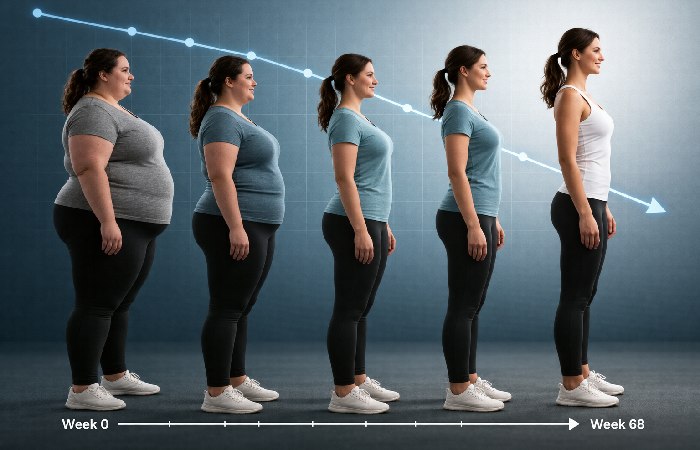
The STEP programme (Semaglutide Treatment Effect in People with Obesity) is a series of four Phase 3 clinical trials that formed the basis for Wegovy’s regulatory approval. These are the numbers that matter.
STEP 1: The Headline Trial
In the STEP 1 trial published in the New England Journal of Medicine (2021), 1,961 adults with obesity (BMI ≥30) or overweight (BMI ≥27 with at least one weight-related comorbidity) were randomised to Wegovy or placebo alongside lifestyle intervention.
Results at 68 weeks:
- Average weight loss: 14.9% of body weight (Wegovy) vs. 2.4% (placebo)
- ≥5% weight loss achieved: 86.4% of Wegovy participants vs. 31.5% placebo
- ≥10% weight loss achieved: 69.1% vs. 12.0%
- ≥15% weight loss achieved: 50.5% vs. 4.9%
That last figure is the one that changed the conversation: half of participants on Wegovy lost 15% or more of their body weight. For context, bariatric surgery typically produces 20–30% weight loss and still leads to greater and more durable weight loss for most patients, but Wegovy gets meaningfully close for some people.
Beyond the Scale: Cardiovascular Benefits
The SELECT trial (2023) added a further dimension. In people with pre-existing cardiovascular disease and obesity (but without diabetes), Wegovy reduced the risk of major cardiovascular events — heart attack, stroke, or cardiovascular death — by 20% compared to placebo over approximately five years. This cardiovascular indication was subsequently approved by the FDA and EMA, expanding Wegovy’s clinical profile beyond pure weight management.
Realistic Timelines: What to Expect Week by Week
Results don’t arrive all at once. Here’s what the trial data and clinical practice suggest:
| Timeline | Typical Experience |
|---|---|
| Weeks 1–4 | Mild appetite reduction; GI side effects most common at this stage |
| Weeks 5–16 | Progressive dose escalation; increasing satiety; 3–5% weight loss typical |
| Weeks 17–36 | Most patients reach maintenance dose (2.4 mg); weight loss accelerating |
| Weeks 37–68 | Plateau in many patients; average total loss ~14.9% if maintained |
| Post-68 weeks | Weight maintenance requires continued treatment (see below) |
The Wegovy Dosage Schedule: The Titration Roadmap

Wegovy is not started at the full 2.4 mg dose. Dose escalation is gradual — intentionally — to minimise GI side effects. Missing this context is one of the reasons people underestimate how long the process takes.
| Phase | Dose | Duration |
|---|---|---|
| Starting dose | 0.25 mg once weekly | 4 weeks |
| Escalation 1 | 0.5 mg once weekly | 4 weeks |
| Escalation 2 | 1.0 mg once weekly | 4 weeks |
| Escalation 3 | 1.7 mg once weekly | 4 weeks |
| Maintenance dose | 2.4 mg once weekly | Ongoing |
Total time to reach full dose: 16 weeks (4 months). If side effects are intolerable at any escalation step, your prescriber may hold the dose for an additional 4 weeks rather than escalating — meaning the journey to the maintenance dose can take up to 20+ weeks.
Managing Wegovy Side Effects: A Practical Guide
GI side effects are real and common — particularly during dose escalation. But they’re also manageable with the right approach. Most people find that side effects peak in the first 4–8 weeks at each new dose level, then subside.
The Numbers (from STEP 1 trial data)
- Nausea: 44% of Wegovy participants (vs. 16% placebo)
- Diarrhoea: 30% (vs. 15%)
- Vomiting: 24% (vs. 6%)
- Constipation: 24% (vs. 11%)
These rates are at the 2.4 mg maintenance dose. At lower doses during escalation, incidence is lower.
Practical Management Strategies
- Eat smaller meals, more frequently. Large meals trigger stronger GI responses. Protein-first eating (lean protein before carbohydrates) tends to improve tolerance.
- Avoid high-fat, spicy, or fried foods during the first 4–8 weeks at each new dose — these amplify nausea.
- Stay upright after eating for at least 30–60 minutes; Wegovy slows gastric emptying, and lying down worsens reflux.
- Ginger. Ginger tea, ginger chews, or ginger capsules may help some people with GLP‑1‑related nausea, but evidence is modest, and they should be used as a gentle complement rather than a primary treatment.
- Hydrate consistently. Vomiting and diarrhoea can cause dehydration — electrolyte drinks (low-sugar) help.
- Do not skip doses to manage side effects — discuss with your prescriber about holding the current dose for another 4 weeks instead of escalating.
Serious Side Effects: When to Seek Medical Attention
These are rare but require immediate medical review:
- Pancreatitis — severe, persistent abdominal pain radiating to the back
- Gallbladder disease — right upper quadrant pain, particularly after fatty meals
- Thyroid C-cell tumours — a theoretical risk based on rodent studies; Wegovy carries a boxed warning for this (see contraindications)
- Hypoglycaemia — more relevant if also taking insulin or sulfonylureas
Who Wegovy Is Approved For — And Who Should Avoid It
Eligible Criteria (per EMA and FDA approval)
Wegovy is approved for adults who meet one of the following:
- BMI ≥ 30 kg/m² (obesity), OR
- BMI ≥ 27 kg/m² (overweight) plus at least one weight-related comorbidity such as type 2 diabetes, hypertension, dyslipidaemia, sleep apnoea, or cardiovascular disease
It is intended for use alongside a reduced-calorie diet and increased physical activity — not as a standalone intervention.
Contraindications: Who Should Not Take Wegovy
- Personal or family history of medullary thyroid carcinoma (MTC)
- Multiple Endocrine Neoplasia syndrome type 2 (MEN 2)
- Pancreatitis (active or history of severe episodes)
- Pregnancy or breastfeeding — teratogenicity is unknown; contraception is strongly recommended
- Severe gastrointestinal disease (gastroparesis, inflammatory bowel disease)
- Known hypersensitivity to semaglutide or any component of the formulation
The Long-Term Reality: What Happens When You Stop Wegovy
This is the question most guides avoid — and the most important one for anyone considering Wegovy.
The STEP 4 trial provides the clearest answer. Participants who lost weight on Wegovy for 20 weeks were then randomised to either continue on Wegovy or switch to placebo for a further 48 weeks.
Result: Those who continued Wegovy maintained or continued to lose weight, while those who switched to placebo regained an average of about two‑thirds of their prior weight loss within one year of stopping.
That finding is not a reason to avoid Wegovy — it’s a reason to go in with honest expectations. Obesity is increasingly understood as a chronic condition requiring ongoing management, not a short-term problem with a finite cure. For many people, Wegovy functions similarly to how a blood pressure medication functions: effective while taken, and the underlying condition returns when stopped.
The practical implication: long-term treatment plans, lifestyle infrastructure, and honest conversations with your prescriber about maintenance strategies are as important as the drug itself.
Wegovy in India: The 2026 Generic Semaglutide Shift
This is a significant development that most global health guides have not yet covered.
Novo Nordisk’s patent protection for semaglutide in India expired in early 2026. Indian pharmaceutical manufacturers — including Natco Pharma and Sun Pharma — have begun launching generic semaglutide formulations at a fraction of the original cost.
Early market pricing for generic semaglutide in India is clustering around ₹1,800–₹5,000 per monthly dose, with some manufacturers positioning ultra‑low‑cost options near ₹1,300 as competition intensifies, compared to roughly ₹20,000–₹30,000 per month for branded semaglutide imports.
These generic products are launching from multiple Indian manufacturers following patent expiry and require CDSCO approval, so quality, device format (vial vs pen), and dosing convenience can differ between brands.
Important caveats:
- Generic semaglutide products are subject to CDSCO (Central Drugs Standard Control Organisation) approval processes in India — not all generics will carry equivalent bioequivalence data at launch
- Branded Wegovy (the 2.4 mg FlexTouch pen formulation) remains listed on 1mg.com but availability and pricing vary significantly by region
- Consult an endocrinologist or obesity specialist to navigate the local availability and quality landscape before switching or initiating
Is Wegovy Right for You? A Decision Checklist
Use this framework to assess fit before your consultation — not as a substitute for one.
Strong candidate signals:
- BMI ≥ 30, or BMI ≥ 27 with a documented comorbidity
- Have tried lifestyle intervention (diet + exercise) without achieving adequate long-term results
- No history of thyroid cancer or MEN 2
- Not pregnant, breastfeeding, or planning pregnancy in the next 2 months
- Willing and able to commit to the 16-week titration period
- Have access to prescribing oversight (GP, endocrinologist, or obesity specialist)
Proceed with caution or explore alternatives:
- History of gallbladder disease or pancreatitis
- Currently on insulin or sulfonylureas (hypoglycaemia risk)
- Severe anxiety around injections or medical procedures
- Significant history of eating disorders (discuss carefully with your doctor)
Common Misconceptions About Wegovy Weight Loss
Here’s where most people get it wrong.
- “Wegovy is the same as Ozempic.” Same molecule, different dose, different approval, different purpose. The 0.4 mg difference in maximum dose is clinically meaningful.
- “You take it for 3 months and you’re done.” Weight loss takes 12–16 months to plateau. Stopping early dramatically increases regain risk.
- “The weight loss is effortless.” Wegovy suppresses appetite but doesn’t eliminate it. Diet quality, sleep, and physical activity all remain relevant — the drug changes the difficulty level, not the game.
- “Side effects mean it’s not working.” GI side effects are most common during escalation and typically resolve at the maintenance dose. Many people who push through the escalation phase report minimal side effects at 2.4 mg.
- “Any semaglutide product will work the same.” Compounded semaglutide (made by compounding pharmacies) is not equivalent to Wegovy in terms of regulatory oversight, bioequivalence standards, or safety tracking. Use extreme caution.
Final Verdict: A Clinically Validated Tool With Real Caveats
For the right person, Wegovy weight loss results are among the most substantial documented for non-surgical obesity treatments to date. An average of 14.9% body weight reduction, with 50% of participants exceeding 15%, has genuinely shifted what medicine considers possible.
But “transformative” comes with context. The side effect burden during escalation is real. The weight regain upon discontinuation is real. The cost and access barriers — particularly outside India’s generic market — are real.
Wegovy is not a magic shot. It is a powerful, prescription-only, clinically validated tool that works best within a comprehensive weight management plan — not instead of one.
If you meet the eligibility criteria and have access to medical oversight, it is worth a serious, informed conversation with your doctor.
Frequently Asked Questions
Q: How long does it take to see results on Wegovy?
A: Most people notice appetite changes within the first 1–2 weeks, but meaningful weight loss typically begins after reaching higher dose levels. In the STEP 1 trial, participants reached an average of ~9% body weight loss by week 28, and ~14.9% by week 68. Visible results are usually apparent within 8–12 weeks.
Q: Is Wegovy’s weight loss permanent?
A: No. The STEP 4 trial found that participants who stopped Wegovy after 20 weeks of treatment regained approximately two-thirds of their lost weight within one year. Obesity is a chronic condition; Wegovy works while taken, and long-term treatment plans are often necessary to sustain results.
Q: Why is Wegovy more expensive than Ozempic?
A: Wegovy is approved specifically for weight management at a higher dose (2.4 mg vs Ozempic’s 2.0 mg maximum), meaning a higher volume of the active pharmaceutical ingredient per pen. It also carries a separate regulatory approval pathway for obesity, which carries different reimbursement, insurance classification, and commercial pricing than a diabetes drug.
Q: Can I switch from Ozempic to Wegovy?
A: Yes — this is clinically straightforward since both contain semaglutide. The switch typically involves titrating up to the Wegovy maintenance dose (2.4 mg) from wherever you are on Ozempic. However, insurance coverage, availability, and the reason for switching all need to be discussed with your prescriber.
Q: What is the Wegovy titration schedule?
A: Wegovy is started at 0.25 mg once weekly and increased every 4 weeks — through 0.5 mg, 1.0 mg, and 1.7 mg — until reaching the maintenance dose of 2.4 mg at week 16. If side effects are significant, your prescriber may hold a dose for an additional 4 weeks rather than escalating.
Q: Is Wegovy available in India?
A: Branded Wegovy is listed by some Indian pharmacies (including 1mg.com) but availability is limited and costs are high. Following the expiry of Novo Nordisk’s semaglutide patent in India in early 2026, generic semaglutide formulations from Indian manufacturers have entered the market at significantly lower price points — though quality and bioequivalence standards should be carefully verified with a doctor before use.
Medical Disclaimer: This article is for informational purposes only and does not constitute medical advice. Wegovy is a prescription-only medication. Consult a licensed healthcare professional before starting, stopping, or adjusting any medication or weight management programme.